I feel like 2013 will be the year everything changes for me. It has to be, right? This last year has been stressful, full of little disappointments, but also some modest accomplishments. There's been tragedies, confusion, and too many bills. Looking forward is the only thing that will change all that.
I've been writing novels for over 2 years now, with several books completed and one actively being queried. A second book will be ready for the same by the end of February. I've sent out dozens of query letters, received many rejections and two full requests (one of which was just the other day, and I have yet to hear back on it). I keep getting told that if I keep at it, and don't give up, I'll make it, if only by default. I'd like to believe that.
So here's what 2013 has in store for me:
First off, I committed to my writing group that I would complete 2 books this year. As I mentioned, one is already set to be done by the end of February, and the second is almost a third of the way written so far. I may even be able to exceed my goal by a whole novel by the end of the year.
Secondly--and I know I have little control over this--I aim to sign a contract with an agent, hopefully even be on submissions to publishers this year. If I keep at it and don't give up, I think this is extremely possible.
Third, this coming year will mark a new level of commitment and time management for me. Earlier in 2012 I made the decision to work part time and quit school, instead focusing on writing as my Plan A. 2013 will be the first full year where I implement that plan. Wish me luck.
Fourth, watch the heck out of a ton of awesome movies coming out this summer.
What do you look forward to in 2013?

Showing posts with label books. Show all posts
Showing posts with label books. Show all posts
The end of yet another book.
It seems almost... mundane news to be finishing another book. I've been at this whole writing thing for years now, and it seems like just another day. Almost. Don't get me wrong, I'm not some writing veteran, but when you do something for so long, it starts to become the norm.
On the other hand, five years ago I never thought I'd write one novel, let alone multiple books. All things being equal, I'm pretty excited.
Only Gingers Can Be Witches was completed last week, and is ready to take its long nap while I begin editing The Sometimes Sword. It's been a weird ride, I can tell you that. I've experienced some of the highest highs and the lowest lows while writing this book, and I'm glad to see it's finally paid off. I've dropped it off to multiple beta readers, and I hope they enjoy, and don't rip me to shreds. *Chuckles nervously* Hopefully I'll be able to make it back to the book by this Fall, and then querying by Winter.
So now I embark on the strange and frustrating journey of editing, a journey I don't yet have much experience in. Wish me luck!
On the other hand, five years ago I never thought I'd write one novel, let alone multiple books. All things being equal, I'm pretty excited.
Only Gingers Can Be Witches was completed last week, and is ready to take its long nap while I begin editing The Sometimes Sword. It's been a weird ride, I can tell you that. I've experienced some of the highest highs and the lowest lows while writing this book, and I'm glad to see it's finally paid off. I've dropped it off to multiple beta readers, and I hope they enjoy, and don't rip me to shreds. *Chuckles nervously* Hopefully I'll be able to make it back to the book by this Fall, and then querying by Winter.
So now I embark on the strange and frustrating journey of editing, a journey I don't yet have much experience in. Wish me luck!
The Salem Witch Trials.
No, this is not going to be some intelligent study of the events that took place way back when. (See right there? I don't even know the dates.) I just find the whole thing really interesting, so I thought I'd talk about it a little bit. Over the last week I've been writing a new book while I let The Sometimes Sword rest, and it includes a young witch character. So I thought, hey, I'll do some research on witches and witchcraft, just for kicks you know? I even went to the library with Becky. Let me tell you, I never thought I would find myself looking up witchcraft in a public place using the Dewey Decimal System. But you live and learn right?
Anyway, I found some great books, some a little more.... technically informative than I preferred (let me just stress, I am NOT a witch, you people with torches and pitch forks), but overall there was some good stuff. A lot of the books focused on presenting thoughts and evidence on two sides of the whole witchcraft issue; for, or against. I'll just say this: the Christian pastor who tried to represent Harry Potter as evil in his arguments came off looking quite a bit worse than the self proclaimed Wicca did in her arguments. But that's beside the point.
Anyway, I found some great books, some a little more.... technically informative than I preferred (let me just stress, I am NOT a witch, you people with torches and pitch forks), but overall there was some good stuff. A lot of the books focused on presenting thoughts and evidence on two sides of the whole witchcraft issue; for, or against. I'll just say this: the Christian pastor who tried to represent Harry Potter as evil in his arguments came off looking quite a bit worse than the self proclaimed Wicca did in her arguments. But that's beside the point.
My review of Chuck Wendig's DOUBLE DEAD. Goretastic. Goregasmic? Go to church to Goreship?

by Chuck Wendig
5 out of 5 stars. Imagine them.
First off, I'm gonna tell you all that Double Dead is not for the faint of heart. If you suffer from a severely overactive gag reflex, heart murmurs, are a nun, or you're just straight up noodle-necked (not a real thing), stay well back. If you don't fall into those categories, pick up the dang book. I give Double Dead 5 solid stars, and it deserves it.
My World's Map. By Your's Truly.
I made this after attending a panel on mapmaking by Isaac Stewart at LTUE. Thought it might be fun to post. If you haven't realized, it's also my background.

Writing Is Uncertainty.
DISCLAIMER: I am not half as depressed as this makes me sound. Just keep that in mind.
I've been thinking lately about how I compare to other writers out there. I can't help but feel like I'm somehow different, broken, wrong. I always hear authors talk about how they doubted themselves back when they were writing their first five novels, but learned to get past it for the manuscript's sake. Kinda like a paralyzed dude triumphantly standing up from his wheelchair at the end of an inspirational movie. But then they leave it at that.
Well, I'm sorry to say, I'm not satisfied with that. I feel like I need to know more. I need to know if their pain (wow that's dramatic) is anything like mine, if their doubt is as soul-consuming. Do they struggle to understand their own writing's worth, like me? I'd like to someday see one of the authors I respect write about their issues, to really see if I'm so different and destined for failure.
Who knows if I'll ever get that wish. I guess they have a reputation to maintain, and such things would hurt it. Well, I don't have a reputation, so for what it's worth, here's my little list of things that I struggle with. If anything resonates with you, or you feel the same way, let me know, please.
I have no idea if I can write worth a crap.
When I write, the sentences often make me cringe.
I often hate my own imagination.
There are times when I look back at my day's writing, and feel a pit form in my stomach; I know I'll have to throw it all away.
I don't know who my characters are. I just hope to god someone else will. We talk all the time about building a strong personality with flaws and quirks, but at the end of the day, it means nothing to my brain.
As far as my own plot goes, it's all over my head, no matter how much I outline. I fly by the seat of my pants, praying I'll end up somewhere safe.
The concept of pacing completely eludes me.
I have no idea if my book is even the slightest bit original.
I don't know if my potential readers will get even the smallest bit of excitement from my action scenes.
When I try to write emotions, I feel they come off as corny and contrived.
When I post about writing, I feel like everyone is laughing at me. "Look at that idiot, he thinks he's an author!"
I don't know a damn about making people laugh.
I will never be a part of the "published author" community.
I don't have what it takes to get an agent or editor to like my books.
No one will ever want to read what I write.
Only spambots visit my blog.
When I look at all the people around me selling books, I know I'll never be as good as them. There are thousands of people writing, right now. I have no chance.
I'm wasting my life, doing this whole writing thing.
Everyone will lie to me when they read my book, tell me it's good. They most likely never read all the way through it.
I often feel like my family, of all people, care less than the strangers.
It's easy to end this by telling all of you to not let these things get you down. To keep going, and all that. I wish I could tell myself the same, and believe it. I won't stop writing any time soon, but I shudder to think that it will always be this way. Am I ready for a life of uncertainty?
I've been thinking lately about how I compare to other writers out there. I can't help but feel like I'm somehow different, broken, wrong. I always hear authors talk about how they doubted themselves back when they were writing their first five novels, but learned to get past it for the manuscript's sake. Kinda like a paralyzed dude triumphantly standing up from his wheelchair at the end of an inspirational movie. But then they leave it at that.
Well, I'm sorry to say, I'm not satisfied with that. I feel like I need to know more. I need to know if their pain (wow that's dramatic) is anything like mine, if their doubt is as soul-consuming. Do they struggle to understand their own writing's worth, like me? I'd like to someday see one of the authors I respect write about their issues, to really see if I'm so different and destined for failure.
Who knows if I'll ever get that wish. I guess they have a reputation to maintain, and such things would hurt it. Well, I don't have a reputation, so for what it's worth, here's my little list of things that I struggle with. If anything resonates with you, or you feel the same way, let me know, please.
I have no idea if I can write worth a crap.
When I write, the sentences often make me cringe.
I often hate my own imagination.
There are times when I look back at my day's writing, and feel a pit form in my stomach; I know I'll have to throw it all away.
I don't know who my characters are. I just hope to god someone else will. We talk all the time about building a strong personality with flaws and quirks, but at the end of the day, it means nothing to my brain.
As far as my own plot goes, it's all over my head, no matter how much I outline. I fly by the seat of my pants, praying I'll end up somewhere safe.
The concept of pacing completely eludes me.
I have no idea if my book is even the slightest bit original.
I don't know if my potential readers will get even the smallest bit of excitement from my action scenes.
When I try to write emotions, I feel they come off as corny and contrived.
When I post about writing, I feel like everyone is laughing at me. "Look at that idiot, he thinks he's an author!"
I don't know a damn about making people laugh.
I will never be a part of the "published author" community.
I don't have what it takes to get an agent or editor to like my books.
No one will ever want to read what I write.
Only spambots visit my blog.
When I look at all the people around me selling books, I know I'll never be as good as them. There are thousands of people writing, right now. I have no chance.
I'm wasting my life, doing this whole writing thing.
Everyone will lie to me when they read my book, tell me it's good. They most likely never read all the way through it.
I often feel like my family, of all people, care less than the strangers.
It's easy to end this by telling all of you to not let these things get you down. To keep going, and all that. I wish I could tell myself the same, and believe it. I won't stop writing any time soon, but I shudder to think that it will always be this way. Am I ready for a life of uncertainty?
Sprucing up a character.
I'm doing this right now. Hopefully some of my ramblings will make sense, possibly even be helpful if you're having the same problems as me. As most of you know, I'm in the middle of a second version of my book The Sometimes Sword. One of the main things I wanted to do this time around was inject more personality into everyone. I feel like so far I've been doing well. Most every aspect is a hundred times better than the first version: plot, descriptions, character voice, action, creepiness, etc. I can do even better though. I'm about halfway through with 61k words complete, but before I go any further, I want to go through and spruce up my main character Astrid.
She's always been the weak link. I've always been so focused on making her likable and relate-able. As I've been reading other books lately, I've been struck by how directly related character personality is linked to their foibles. They walk hand in hand. Therefore, it stands to reason that if Astrid lacks the proper amount of flaws, she also lacks an equal amount of personality. So I'm taking her back to the drawing board, re-evaluating her, and adding in some crap. We'll see how it goes.
She's always been the weak link. I've always been so focused on making her likable and relate-able. As I've been reading other books lately, I've been struck by how directly related character personality is linked to their foibles. They walk hand in hand. Therefore, it stands to reason that if Astrid lacks the proper amount of flaws, she also lacks an equal amount of personality. So I'm taking her back to the drawing board, re-evaluating her, and adding in some crap. We'll see how it goes.
I've been interviewed! Also a bit about why I haven't posted in a while.
Hey all, it's been a lean couple of weeks post-wise, so sorry about that. I wanted to touch base real quick, and let you know that I'm still alive! First off, Leigh Covington interviewed me on her blog, which you can visit here. So click that link! It's worth it.
Also, the reason I haven't been doing much on the blog is because I've been writing. Yeah I know, right? I've actually been picking up the pace, and aside from the last three days (LTUE), I've been getting at least 1k words knocked out per day. On Wednesday I actually hit 3k in one day, so yeah, I figure I can forgive myself.
Hopefully I'll get a chance to get a good post up here soon!
Also, the reason I haven't been doing much on the blog is because I've been writing. Yeah I know, right? I've actually been picking up the pace, and aside from the last three days (LTUE), I've been getting at least 1k words knocked out per day. On Wednesday I actually hit 3k in one day, so yeah, I figure I can forgive myself.
Hopefully I'll get a chance to get a good post up here soon!
Local Writer Interview: Ali Cross
This month's interview is a little different, since Ali is not simply an aspiring writer, but also a self-published one. We met across the Internet machines through Melanie Fowler, another of my interviewees. Ali is very, VERY active in the writing community, and I'm excited to get to know her a little better. As you all know, I like to just jump right in, so here goes!

 Do you have any special sales you'd like me to highlight?
There you go people, go check out her blog and all the goodies she has for you, and read her book Become dang it!
If it's not too much to ask, how old are you?
LOL, I’m in my 40’s. But I never really aged past 23. I’m eternally youthful. (Ha!)
Are you married? Kids?
Heck yeah! I have a rockin’ husband who’s a computer genius who slashes computer code and cuts hackers off at the knees. My two boys both eleven, are evil geniuses who take after their dad (thank goodness. One of them is a black belt and the other is close on his heels. At our house it’s all awesome, all the time.
Where in our lovely area do you live?
I live in West Jordan, Utah, but I’m not even an American. I’m a Canadian who’s followed her man (who followed a job) to the States and has been trying to get back home every since. (It’s been twenty years. I haven’t been too successful yet, obviously.)
How long ago did you start writing seriously?
I started writing seriously nine years ago. I know the precise date because my family and I were driving into the mountains for a weekend in the autumn leaves. On our way out popped from my mouth: “I want to write a book.” I swear I did not think those words before I said them, but as soon as I did, I knew it was true. My hubby and I chatted about the idea (I’d always wanted to write a story about my favorite Dungeons & Dragons character—hey, don’t laugh) and it wasn’t long before he admitted that he, too, would like to write a book.
We stopped at a Podunk gas station convenient store, happily discovered they stocked the basic materials with which to begin a book (notebooks, pens, index cards and tape!), brainstormed and outlined our books over our long weekend and … the rest is history! (And to follow-up, we both wrote our books, and finished them together, New Year’s Eve 2003!)
What project are you currently working on?
Right at this very second I’m finishing up the first draft of a middle grade fantasy called LAND MAGIC. Meanwhile, another MG fantasy THE SWIFT, is resting between revisions, and DESOLATION (book two of Desolation, my young adult urban fantasy series) is resting before revisions begin. Exciting stuff!
How long have you been working on Land Magic?
LAND MAGIC was conceived a couple years ago, but I didn’t have to work on it at that time. I did a quick and dirty outline and left it alone. I started drafting it during NaNo ’11, but couldn’t finish because of the release of BECOME (the first in the Desolation series). Time to finish this baby up!
Tell us a little about it.
Here’s my working blurb:
In a world where land magic has fallen into disuse and land comes together and breaks apart like clouds in the sky, one boy must rediscover the ways of the old magic in order to reunite his family and save mankind.
In a world where land magic has fallen into disuse and land comes together and breaks apart like clouds in the sky, one boy must rediscover the ways of the old magic in order to reunite his family and save mankind.
Wow, that sounds kinda lame. I promise it’s a lot more fun and awesome than it sounds. J
What are your goals for it?
I self-published BECOME, and I love, love, loved the experience. I’d like for LAND MAGIC to reach middle grade readers which (I believe) there’s no doubt traditional publishing methods are (so far) better suited for, but . . . I honestly can’t imagine publishing in the traditional sense.
Have you sent out any queries? How many have you gotten responses to?
Oh yeah. I queried BECOME to 103 agents. Twenty-eight agents read the full manuscript. One agent read three full versions of the novel, and still rejected it. Another agent made an offer, but ended up being a flake and left me hanging for four months before I finally got wise and moved on. Crazy, right?
Have you published anything previously?
Nope! BECOME was my maiden voyage!
Do you have any special sales you'd like me to highlight?
YES! Through February 4th (the day of NiNoCon, woot!) BECOME is on sale at Amazon here and Smashwords here for only $.99!
Anything else you'd like to tell us about works you've previously published/put on sale?
BECOME is an awesome, dark young adult novel—if you’re a Buffy fan, or a Lilith St. Crow fan, or a Melissa Marr fan . . . I think you’d like my book, too!
What is your favorite book or author? Why?
My favorite book(s) belong to THE FIONAVAR TAPESTRY by Guy Gavriel Kay. I’m not a fan of all of his books, but this trilogy is the one that inspired me to write (because I wanted to write something as amazing as those books—to reach people the way these books reached me). THE FIONAVAR TAPESTRY, is rich and beautiful, heartbreaking and fulfilling—it’s everything I think a truly great book should be. And I think it would nowadays fall into “new adult” fantasy, but back when I first read it it was just regular old fantasy. J
What has been the hardest part about writing your current work? About writing in general?
I’m not sure. I haven’t struggled with the craft in the same way that I know other people struggle. For me, the hardest part is believing in myself when no one else does.
What has been the best or most rewarding aspect of writing?
Without a doubt the most rewarding part are all the friendships I have formed through writing and blogging. Who knew that such a solitary art could give me such an amazing sense of belonging?
Do you have any "technical" suggestions for new writers?
A couple tools that have really helped me. Buy the book SAVE THE CAT by Blake Snyder. It’s funny, quick and easy to read. It’s a script-writing guide, but it absolutely relates to writing. I swear you will not regret it. Next to that, get thee a crit group! I think that should be in the writer’s ten commandments.
Do you have any sage advice for new writers?
LOL, no. Just, if you have a dream? Don’t let it stay in dreamland forever. Live your dream—because you CAN.
Is there anything else you'd like to tell our readers?
Come to NiNoCon this Saturday (February 4th!). It’s a free online writer’s conference taking place at www.ninjaswrite.com. It’ll be fun! There’ll be lots of great info! And PRIZES!!
Give us some links to any blogs, websites, or other online media you run.
You betcha! Thanks for letting me plug, Trevor!
ali cross (blog) www.alicross.com
the writer’s dojo www.ninjaswrite.com
the indelibles (a group of 25 self-or-indie-published authors) http://indeliblewriters.blogspot.com
There you go people, go check out her blog and all the goodies she has for you, and read her book Become dang it!
Save the Cat. A book I've never read, but I'll discuss it anyway.
This semester, I took a class called Intro to Film. It was basically just a filler credit to get my Fine Arts requirement, but I'm happy to say that it has become more than that. It seems that I fell into a wildly beneficial learning experience without even realizing it. How's that for good luck? I'm only three weeks in, but so far we've discussed a variety of subjects, each one either directly, or at least feasibly, relating to novel writing. The format of the class runs like this: we have an hour lecture, a two hour movie, and an hour discussion. I've already gone into this in a previous post, so I'll be brief. In the hour lecture, the professor teaches us something about narrative structure, themes and motifs, character development, set dressing, lighting, or music, etc. Some of it is amazingly helpful in my own writing, and even the other stuff, such as set dressing and lighting can still be taken for what its worth.
Let me explain. There is a term in the film business, mise en scene, which basically means the style of what you see. The Director and Production Designer of a movie try their best to keep this consistent, and it's what gives the film its "feel". It can include furniture, set design, color palette, lighting, makeup, costuming etc. Think of films like Moulin Rouge, 300, or any Tim Burton production. These have a very strong mise en scene. The same goes for an author writing a book. While reading a book isn't a strictly visual medium, the visuals are still important, if you know what I mean. The author acts as the Production Designer, creating a world through description, not images. A good, or shall we say, successful writer, can plant a literary mise en scene right in the reader's mind. By keeping descriptions of objects, clothing, and buildings consistent, a writer can maintain a distinct style that persists in the reader's mind throughout the story. Not only that, but the way in which a writer forms their sentences or uses pronouns and adverbs can give the actual words a recognizable style. Harry Potter, The Wheel of Time, and the Codex Alera books all accomplished this in my opinion.
So I guess what I'm saying is that I've come to appreciate movies as a learning experience for my own writing. This leads me to the subject of this post. In class last week, we discussed narrative structure. I've done a lot of my own self-learning about this, listening to podcasts, attending panels, etc., but I've always been a little hazy on how to properly structure my stories. My professor told us about an old Hollywood staple, taken from a book called Save the Cat! The Last Book on Screenwriting You'll Ever Need by Blake Snyder. It's intended to be a help for screenwriters, but it applies just as well to novelists. In it, the author outlines a series of "beats" that every successful story should touch on. It's not a formula per se, simply an outline of what will keep an audience/reader interested in the story. Since you can find it on the web in a million places or in any film class, I'll outline it really quick here:
Opening Image (where we see the character, and get a basic idea of who they are):
Theme Stated (the viewer/reader gets to see what the movie/story will eventually tell them):
Setup (Characters living life):
Catalyst (the big "thing" that happens):
Debate (where we see the characters trying to sort out their options, figure out what to do):
Break Into Act Two (this is where they take their first step toward and attempt to resolve the problem):
"B" Story (a different, but associated character's story, many times this is a romance):
Fun and Games (think training montages, newly dating couple having shenanigans, etc.):
Midpoint (disaster that commits character to their path, halfway through the story):
Bad Guys Close In (this is where stuff begins to escalate, become more serious):
All Is Lost (low point, everything bottoms out and the worst has happened):
Dark Night of the Soul (kinda self-explanatory, characters question everything, superhero hangs up his cape in despair, oh crap):
Break Into Act Three (Where things begin to turn around, characters begin to fight back in earnest):
Finale (the big finish, sword fight, dog fight, Luke cuts off Vader's hand, and the Emperor is thrown down the ventilation shaft):
Final Image (new life, we see the aftermath, people are reunited, usually a happy ending, but not always):
I may have misconstrued some of those points, and if I did, let me know. But the general idea is there. A successful screenplay hits all of these beats at some point, and so does a novel (in my opinion). Today I went through, and applied my own book to these beats. I was surprised to find that most everything was represented, though the order was a little out of whack. I'm not saying this will work for every novelist, or even every genre. As for me, it's been a big help. Take a look at it, try to assign your favorite movie or book to these beats. I guarantee you'll be able to. Then maybe try your own book. Story and character are the most important thing in any novel, so take some time and give them some love.
Let me explain. There is a term in the film business, mise en scene, which basically means the style of what you see. The Director and Production Designer of a movie try their best to keep this consistent, and it's what gives the film its "feel". It can include furniture, set design, color palette, lighting, makeup, costuming etc. Think of films like Moulin Rouge, 300, or any Tim Burton production. These have a very strong mise en scene. The same goes for an author writing a book. While reading a book isn't a strictly visual medium, the visuals are still important, if you know what I mean. The author acts as the Production Designer, creating a world through description, not images. A good, or shall we say, successful writer, can plant a literary mise en scene right in the reader's mind. By keeping descriptions of objects, clothing, and buildings consistent, a writer can maintain a distinct style that persists in the reader's mind throughout the story. Not only that, but the way in which a writer forms their sentences or uses pronouns and adverbs can give the actual words a recognizable style. Harry Potter, The Wheel of Time, and the Codex Alera books all accomplished this in my opinion.
So I guess what I'm saying is that I've come to appreciate movies as a learning experience for my own writing. This leads me to the subject of this post. In class last week, we discussed narrative structure. I've done a lot of my own self-learning about this, listening to podcasts, attending panels, etc., but I've always been a little hazy on how to properly structure my stories. My professor told us about an old Hollywood staple, taken from a book called Save the Cat! The Last Book on Screenwriting You'll Ever Need by Blake Snyder. It's intended to be a help for screenwriters, but it applies just as well to novelists. In it, the author outlines a series of "beats" that every successful story should touch on. It's not a formula per se, simply an outline of what will keep an audience/reader interested in the story. Since you can find it on the web in a million places or in any film class, I'll outline it really quick here:
Opening Image (where we see the character, and get a basic idea of who they are):
Theme Stated (the viewer/reader gets to see what the movie/story will eventually tell them):
Setup (Characters living life):
Catalyst (the big "thing" that happens):
Debate (where we see the characters trying to sort out their options, figure out what to do):
Break Into Act Two (this is where they take their first step toward and attempt to resolve the problem):
"B" Story (a different, but associated character's story, many times this is a romance):
Fun and Games (think training montages, newly dating couple having shenanigans, etc.):
Midpoint (disaster that commits character to their path, halfway through the story):
Bad Guys Close In (this is where stuff begins to escalate, become more serious):
All Is Lost (low point, everything bottoms out and the worst has happened):
Dark Night of the Soul (kinda self-explanatory, characters question everything, superhero hangs up his cape in despair, oh crap):
Break Into Act Three (Where things begin to turn around, characters begin to fight back in earnest):
Finale (the big finish, sword fight, dog fight, Luke cuts off Vader's hand, and the Emperor is thrown down the ventilation shaft):
Final Image (new life, we see the aftermath, people are reunited, usually a happy ending, but not always):
I may have misconstrued some of those points, and if I did, let me know. But the general idea is there. A successful screenplay hits all of these beats at some point, and so does a novel (in my opinion). Today I went through, and applied my own book to these beats. I was surprised to find that most everything was represented, though the order was a little out of whack. I'm not saying this will work for every novelist, or even every genre. As for me, it's been a big help. Take a look at it, try to assign your favorite movie or book to these beats. I guarantee you'll be able to. Then maybe try your own book. Story and character are the most important thing in any novel, so take some time and give them some love.
Aspiring Writer Interview: Alison Ash
Alison was lucky. I asked her to do this a whole week in advance. I'd like to take the time to apologize to my previous interviewees for the stupidly short amount of time I gave them. (But they all rose to the challenge and helped me out, so thanks guys!) I met Ali last year, when I responded to an ad for a writing group looking for members. I was really nervous about talking to anyone about writing at that point (I was still in the "writing closet"), but she was extremely nice and when all was said and done, they accepted me into their group. As some of you may know, I refer to this as my "pretend writing group", because I've only made it to three meetings. Ever. But they are all great people, so they haven't kicked me out yet. Some day, I'll make it I promise! Anyway, Ali is the group leader, and has a book of her own, one that I have had the privilege to read (half way so far, and loving it). She's startlingly hilarious, and somehow manages to hit my funny bone at least once per page. I really hope to see her published someday, so I can say "I liked Alison Ash's stuff before it was cool" or something hipster-y like that. Alright, let's get to the questions.
 |
| Alison Ash |
How old are you?
I just turned the very unremarkable age of 31.
Are you married? Kids?
Are you married? Kids?
Single. Two spunky daughters age 10 and 6. It feels strange having a daughter who is a decade old.
Where do you live?
Where do you live?
Utah, west side!
How long ago did you start writing?
My first book was written when I was five. It was called The Duck Robbers and I made several copies. It was about a robber who stole baby animals from the forest. Looking back, the villain didn't have a very strong motivation. He just seemed to get his kicks off locking up woodland creatures under his stairs and then disappearing so the parents of those creatures (fully-equipped with opposable thumbs) could unlock the cage and free the babies. After this emancipation, the robber must have died or left for Hollywood because he never came back for a sequel. He also looked suspiciously like the Hamburgler.
Have you published anything?
Does 40+ rejection letters count? No? Oh.
What are you working on right now?
I will speak to the novel I finished in early 2011, tentatively titled The Lost Location of Sunday City. I am in the submission stage.
How long have you been working on The Lost Location of Sunday City?
How long have you been working on The Lost Location of Sunday City?
I began writing the book during a bad bout of the flu in January 2007, but fashioned the idea in my head while driving years earlier in 2002. At the time, someone I cared had been victim of a violent crime and had changed tremendously as a result. As I drove, I remembered how she used to be as a child, very bright and innocent, and probably the most beautiful girl I had seen in real life. After the crime she was changed. Her eyes were hollow, and she spiraled into a ghostly waif of a person. All the spark and life had been sucked out of her. As I passed a ruined building with a missing roof and only window wells left, I imagined her adult self standing on the inside and her child self on the outside. The adult was warning the child about what was to come, so it could be avoided and innocence preserved. I then wondered what I might warn myself about if I could could speak to my child self. I passed that building daily with this image in my head. Eventually I combined the idea with the phrase "Time Trees" (a cast-off from a novel I started but never completed) and dreamed up the idea of a grove of trees that were tied to time. The idea seemed very simple and I thought I could write a quick little book about a boy who warns his past self about misfortunes in the future. I made a primitive outline while high on cold medicine. I wrote diligently for six months and had a nice little first draft of the first act (which was looking less and less like my hasty little outline, but isn't that always the way?) when I decided to rebuild my computer. I won't get into the technical details, but suffice it to say, I thought I had backed up my novel only to find the file had been permanently deleted! To say I was devastated is an understatement. I cried for the first day, went through a deep depression for the following two weeks. I had difficulty eating and sleeping. Neighbors started knocking, asking if someone had died. Eventually I started again, only to have the same thing happen a few months later after a virus hit our server. Luckily I only lost a couple of chapters that time. I was so angry with myself I couldn't bring myself to rewrite those chapters. I decided to start on the second act and go back later when my emotions had settled.
Other strange things started happening surrounding the novel. When I would go to write, something would always prevent me (an illness, emergency, etc). I began to have dark dreams about it. Also, the overall quality of my life was lowering. Several disasters had strained me and my family. One day I realized the bad luck all started after that flu in January when I decided to write the book. I joked with myself that the novel must be cursed. It was at that moment that I realized my main character should be cursed! I rewrote those lost chapters with that element and it ended up dominating the entire novel.
I thought often about those lost efforts and realized something. The rewrite was much better and far stronger than the chapters I had lost. Had I never experienced the pain and depression of losing a combined eight months of work, I would have never come up with the key elements of the plot. The idea of good coming from suffering became the theme of the entire book and the lesson the main character learns.
(Incidentally, my friend who was the victim of the crime did eventually recover and is now a happy, productive adult)
Tell us a little about it.
Other strange things started happening surrounding the novel. When I would go to write, something would always prevent me (an illness, emergency, etc). I began to have dark dreams about it. Also, the overall quality of my life was lowering. Several disasters had strained me and my family. One day I realized the bad luck all started after that flu in January when I decided to write the book. I joked with myself that the novel must be cursed. It was at that moment that I realized my main character should be cursed! I rewrote those lost chapters with that element and it ended up dominating the entire novel.
I thought often about those lost efforts and realized something. The rewrite was much better and far stronger than the chapters I had lost. Had I never experienced the pain and depression of losing a combined eight months of work, I would have never come up with the key elements of the plot. The idea of good coming from suffering became the theme of the entire book and the lesson the main character learns.
(Incidentally, my friend who was the victim of the crime did eventually recover and is now a happy, productive adult)
Tell us a little about it.
The novel concerns Gabriel Gussie, who's got himself a Muxy—a family curse that causes terrible things happen on his birthday. Cow pie rain, flukes in gravity, trailer-park terrorizing tornadoes, each year the disasters get worse. The entire community is afraid of him, kids at school avoid him, and his parents are sure that someday they’re going to wake up dead. But when Gabriel starts seeing visions, warning him that his curse will cause the death of his baby brother on Gabriel’s thirteenth birthday, he knows he must find a cure quickly.
A mysterious family friend named Tuck shows up, promising just that. If Gabriel will come with him to Sunday City, a ghost town closed to outsiders for a century, he will find his cure.
But Gabriel is in for a surprise. Upon arrival, he learns that not only does everyone in Sunday City believe that Tuck died thirty years ago, but Gabriel is the heir to his vast hoard of gimcracks—antiques with magical properties. Tuck has plans for Gabriel and his Muxy. As Gabriel’s birthday looms closer, Tuck’s dark secrets reveal a plot to destroy Sunday City from beyond the grave. His weapon of choice: the Muxy.
With the clock running out, Gabriel must dodge possessed deer, thwart greedy gimcrack-grabbers, uncover the history of his Muxy, save his brother’s life, and rescue the city he has come to call home before his birthday curse blows out more than candles.
In The Lost Location of Sunday City you somehow manage to cram a massive amount of humor into every chapter, most of it of the crazy variety. How do you come up with the ideas for all the intensely strange things people say and think?
A lot of the humor are real-life failed jokes put in the correct context and given the right timing. That's the beauty of writing, you have time to decide if you've gone too far. In real life that luxury does not exist, so unfortunately, my friends and family do a lot of head scratching after they are done talking to me. But I am laughing in my mind, so that's what counts!
What are your goals for The Lost Location of Sunday City?
A mysterious family friend named Tuck shows up, promising just that. If Gabriel will come with him to Sunday City, a ghost town closed to outsiders for a century, he will find his cure.
But Gabriel is in for a surprise. Upon arrival, he learns that not only does everyone in Sunday City believe that Tuck died thirty years ago, but Gabriel is the heir to his vast hoard of gimcracks—antiques with magical properties. Tuck has plans for Gabriel and his Muxy. As Gabriel’s birthday looms closer, Tuck’s dark secrets reveal a plot to destroy Sunday City from beyond the grave. His weapon of choice: the Muxy.
With the clock running out, Gabriel must dodge possessed deer, thwart greedy gimcrack-grabbers, uncover the history of his Muxy, save his brother’s life, and rescue the city he has come to call home before his birthday curse blows out more than candles.
In The Lost Location of Sunday City you somehow manage to cram a massive amount of humor into every chapter, most of it of the crazy variety. How do you come up with the ideas for all the intensely strange things people say and think?
A lot of the humor are real-life failed jokes put in the correct context and given the right timing. That's the beauty of writing, you have time to decide if you've gone too far. In real life that luxury does not exist, so unfortunately, my friends and family do a lot of head scratching after they are done talking to me. But I am laughing in my mind, so that's what counts!
What are your goals for The Lost Location of Sunday City?
I grew up with a desire to be traditionally published. However, I have seen a lot of authors gain success in self-publishing. I don't believe we can predict where technology is going to eventually bring books, but I am excited to see that publication is no longer run by "gatekeepers." I have no plans to self publish but that may change.
What is your favorite book or author? Why?
What is your favorite book or author? Why?
Dr. Seuss was a prophet. I believe Oh, the Places You'll Go should be government issued to new parents. But I can't rule out Shel Silverstein's The Missing Piece which is a perfect allegorical representation of the duality of human nature and how we crave both individualism and coupling. I have a copy on my coffee table and pick it up when I need a good, unanswerable question.
What has been the hardest part about writing your current work? About writing in general?
What has been the hardest part about writing your current work? About writing in general?
Finding time is always a challenge. Especially with children, a full time job and a host of extra hobbies. I often have to take entire weekends and dedicate them to whatever writing task is at hand.
What has been the best or most rewarding aspect of writing?
Reading the entire work from start to finish and realizing it makes sense and is actually a book! The first time I did so I reached the last chapter at two-a.m. with surprise. I couldn't believe it was over and wanted it to continue. I wanted to know what would happen next with Gabriel and Ebony and their friends. It was a strange, disconnected moment. Stephen King describes it as "'like reading the work of someone else, a soul-twin perhaps."
Do you have any "technical" suggestions for new writers?
Do you have any "technical" suggestions for new writers?
One thing I hate is the cliche. I really try to avoid the first solution that pops in my head. When I need to brainstorm new ideas I talk into a tape recorder for as long as it takes for the "Eureka!" moment to come. This has helped me puzzle out scenes and integrate threads into later chapters. It gives me an artificial sense of collaboration, as if I am discussing my book with my future self.
Do you have any sage advice for new writers?
Do you have any sage advice for new writers?
I really believe if we all just keep pounding at it, dedicating at least an hour a day at our books, we will eventually see publication. You never hear of a person who wrote and wrote and kept submitting their whole lives that didn't eventually see publication. We may write a few scrappers first (I wrote two horrible ones in my twenties), but that's just the awkward adolescence of talent that everyone has to go through before they become good at their craft. Just keep swimming!
Well, there you have it! It just goes to show that we can never give up, you and me. So get back to writing!
More updates on TSS 2.0, LTUE, and a quick bit on Voice (and I use too many parenthesis).
School has started. Alas, but it is true. Spring Semester 2012 is in full swing, and I wasn't really prepared for it. I'm not too worried though. I'm taking fewer classes (and easier) than last semester, so I can handle it. In part, this more laid-back schedule is because I want to devote more time to writing. College is my backup plan (not plan A), so I feel like every once in a while I should stop trying to do the "smart thing" and really go for my dreams. This is easier said than done. I'm well aware that many writers finish books and get published despite school, a full time job, and a family. Well I'm not that guy. I'm the guy who gets addicted to World of Warcraft over Christmas break, and falls so far into depression he can't even be pulled out with an ice-cream cone. I'm the guy who spends more time bemoaning his failings (quietly of course) than trying to correct them. Come to think of it, it's a miracle I was ever able to finish my first novel.
I am working hard at it though. Every week I have set days and time where I normally had classes that are now dedicated to writing. I've kept to it so far, even though the first day was excruciating (I'm telling you, writing is not like riding a bike, you can forget/get out of practice). Today's holiday is an opportunity for me to get in another huge chunk of writing time, and I'm hoping I can persevere. (Yes, depression and addiction to WoW can sometimes feel totally out of your control, even though they're not.)
Anyway, a quick update on The Sometimes Sword 2.0. I'm now at 30k words, roughly 90 pages at it's current font and margin settings. I'm not quite a third of the way through, so its going to be running 20-30k words longer than version 1.0 (this kind of scares me). Other than the slow progress, I feel like it's going well. I've been hitting dialogue a little closer to the mark this time around, and I've been working hard at making plot points cooperate better. My characters have started with a bit more mass and volume, and I've worked out some of the kinks in my story telling. Aside from the motivation to actually sit down and write, I'm feeling pretty positive about it on the whole.
For those of you in Utah (and perhaps without), you may know of a writing convention called Life the Universe and Everything (LTUE), held in Orem (I think?). It's an annual event in February, and from what I hear, it's the bee's knees. I'll be attending all three days (if I can swing it with work), backpack and tape recorder in hand. Yeah, I'm one of those over eager amateurs, so what? If you're going, hit me up so we can chat and attend a few panels together. Just a side note, membership is FREE for current students with college ID. So yeah, no excuses.
One last thing. As some of you may know, I'm a bit obsessed with the idea of a writer's "voice". It's something that has always eluded me, and I can't even define to myself, let alone other people. I can see it in the writers I read, but not myself. It's more than a bit frustrating. Today I happened upon a post on Terribleminds.com, a writing website run by Chuck Wendig (I highly recommend you check him out). I wanted to highlight part of that post and link the rest:
"Writers are at the outset a scared species. It’s not our fault: we’re told that it’s a bad idea and unless we want to prepare for a life lived inside a palatial piano crate we should just buckle down and become accountants. And so I think there’s a lot of bad psychic voodoo that clogs the works, and until we start to clear that out, it’s really hard to find out who we are on the page and what our voice looks and sounds like. Finding your voice is then synonymous with losing the fear of not just writing but of being a writer."
You can read the entire post here, and I very much recommend that you do. I love this dude's stuff, and it has helped me a ton. A word of caution though: he does use a hilarious amount of vulgarity and straight up insanity. It enriches the experience. He is very serious about writing though, and writing well.
So that's it folks. That's what's going on with me. What about you? What have you been up to, and what's your "Plan A"?
I am working hard at it though. Every week I have set days and time where I normally had classes that are now dedicated to writing. I've kept to it so far, even though the first day was excruciating (I'm telling you, writing is not like riding a bike, you can forget/get out of practice). Today's holiday is an opportunity for me to get in another huge chunk of writing time, and I'm hoping I can persevere. (Yes, depression and addiction to WoW can sometimes feel totally out of your control, even though they're not.)
Anyway, a quick update on The Sometimes Sword 2.0. I'm now at 30k words, roughly 90 pages at it's current font and margin settings. I'm not quite a third of the way through, so its going to be running 20-30k words longer than version 1.0 (this kind of scares me). Other than the slow progress, I feel like it's going well. I've been hitting dialogue a little closer to the mark this time around, and I've been working hard at making plot points cooperate better. My characters have started with a bit more mass and volume, and I've worked out some of the kinks in my story telling. Aside from the motivation to actually sit down and write, I'm feeling pretty positive about it on the whole.
For those of you in Utah (and perhaps without), you may know of a writing convention called Life the Universe and Everything (LTUE), held in Orem (I think?). It's an annual event in February, and from what I hear, it's the bee's knees. I'll be attending all three days (if I can swing it with work), backpack and tape recorder in hand. Yeah, I'm one of those over eager amateurs, so what? If you're going, hit me up so we can chat and attend a few panels together. Just a side note, membership is FREE for current students with college ID. So yeah, no excuses.
One last thing. As some of you may know, I'm a bit obsessed with the idea of a writer's "voice". It's something that has always eluded me, and I can't even define to myself, let alone other people. I can see it in the writers I read, but not myself. It's more than a bit frustrating. Today I happened upon a post on Terribleminds.com, a writing website run by Chuck Wendig (I highly recommend you check him out). I wanted to highlight part of that post and link the rest:
"Writers are at the outset a scared species. It’s not our fault: we’re told that it’s a bad idea and unless we want to prepare for a life lived inside a palatial piano crate we should just buckle down and become accountants. And so I think there’s a lot of bad psychic voodoo that clogs the works, and until we start to clear that out, it’s really hard to find out who we are on the page and what our voice looks and sounds like. Finding your voice is then synonymous with losing the fear of not just writing but of being a writer."
You can read the entire post here, and I very much recommend that you do. I love this dude's stuff, and it has helped me a ton. A word of caution though: he does use a hilarious amount of vulgarity and straight up insanity. It enriches the experience. He is very serious about writing though, and writing well.
So that's it folks. That's what's going on with me. What about you? What have you been up to, and what's your "Plan A"?
Aspiring Writer Interview: Anna Gailey
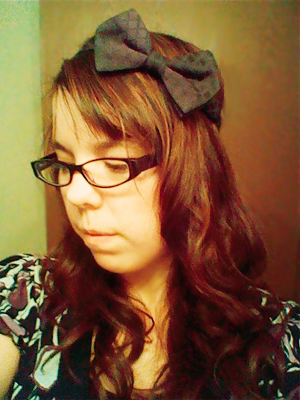 |
| Anna Gailey |
Thanks for helping me out on short notice Anna. Tell us about yourself. Are you married? Have any kids?
I've been married for almost four years and though we don't have any children, we do have two cats, named Aerith and Rikku (After Final Fantasy characters) that are as close to children as we would like at the moment.
Let's talk about writing. How long ago did you start?
I've been writing for a long time. I remember writing small stories when I was younger, then when I found my love Harry Potter that's when a lot of the writing started. Mostly with Online Role Playing and fanfiction (that is truly terrible, like all fanfiction should be). It wasn't until about High School that I seriously considered writing more.
What project are you currently working on?
Currently I'm contemplating on revising my NaNoWriMo [titled Out of Tune]. Since this was the first year that I actually finished (with a whopping 50,123 words), I feel like I should try and tweak it a little bit. Though the idea of reading it, and realizing that it's as awful as I imagine it to be, is a bit daunting.
I'm also working on a short story about a modern Greek God reincarnation. It may end up going further than I think, but for now I'm just planning it being a short story.
How long have you been working on Out of Tune?
Not long. In fact, only a few months. Which (unfortunately) is the longest I've ever really spent on something of my own creation.
Tell us a little about it.
My NaNoWriMo project is about a deaf girl that falls for a boy who is hearing. I am completely in love with Deaf Culture, and I really wanted to try out writing about it. There are a lot of common misconceptions about people who are deaf, and so I handle explaining that through my main characters, and how the language difference could be a challenging, but not completely impossible to overcome.
What are your goals for it?
As of right now, my goal is to finish. As awesome as it would be to get published, I'm focusing on one task at a time. Finish, then revise, revise some more, and again with the revising, share with friends/critique partners, revise more, ect.
What is your favorite book or author? Why?
That is a loaded question, as of right now, I have a handful of favorite authors.
Meg Cabot: I loved Meg's Young Adult literature as soon as I read them, then as I got older, I jumped into her 'adult' fiction. I love the way that she writes, it's like talking to your best friend after months of not talking.
John Green: Having become obsessed with his YouTube videos, this man has given me some of the greatest advice when it comes to writing. John Green is one of those authors who when you read his stuff, you don't think "I want to write something that is just as good as this" you think "This is amazing, I want to write something BETTER!", which is what a good book does to authors.
I normally tend to stick to Contemporary Fiction, and Young Adult Contemporary. It's where I'm the most comfortable.
What has been the hardest part about writing Out of Tune? About writing in general?
The hardest part of writing my NaNo is the conversations. I had to figure out a way to describe the sign language, while also making it so the characters could understand each other. I used everything from charades, to pen and paper, to just slow talking.
What has been the best or most rewarding aspect of writing?
Creating characters. I have about 30 characters that I've written out full histories and bios for that still have yet to find a home in a story. Creating characters is one of my favorite things to do.
Do you have any "technical" suggestions for new writers?
When I start a story, I always create Character profiles of my main characters. That tell a little bit about the character and range from favorite color, to thoughts about the universe. This helps me when I need to look back on my character when I'm not sure what they would do in a certain situation.
Do you have any sage advice for new writers (inspirational messages, cautions, etc.)?
Two of the best quotes about writing I've ever found are from John Green and Meg Cabot.
John Green: "I just give myself permission to suck. I delete about 90% of my first drafts (the only exception to this rule so far has been Will Grayson, Will Grayson) so it doesn’t really matter much if on a particular day I write beautiful and brilliant prose that will stick in the minds of my readers forever, because there’s a 90% chance I’m just gonna delete whatever I write anyway. I find this hugely liberating.
I also like to remind myself of something my dad said to me once in re. writers’ block: “Coal miners don’t get coal miners’ block.”"
Meg Cabot: "Write the kind of story you would like to read. People will give you all sorts of advice about writing, but if you are not writing something you like, no one else will like it either."
Particularly the "Giving myself permission to suck" thing has stuck with me.
Have you published anything?
I had a few poems published when I was in high school, but nothing as of late. I'm also part of a collaborative website called GeekCrafts.com.
Can you give us some links to any blogs, websites, or other online media you run?
This section should be called: Anna is addicted to the internet:
Twitter: http://twitter.com/luckiestxclover
Blog: http://annasheadintheclouds.blogspot.com
YouTube: http://youtube.com/4girlsandatardis (a collaborative Youtube channel)
GeekCrafts: http://geekcrafts.com
Thanks Anna!
Finding your groove.
Finding the rhythm and flow of writing isn't easy. I think some new writers think that once you finish your first book, or sell a novel, that suddenly writing becomes easy. I know I did. Unfortunately, it never works that way. It has been several months since I finished my first draft of The Sometimes Sword, and yet the last few weeks have been the most difficult for me to find motivation. Now, I don't want to focus on the difficulties; I want to highlight some of the things that will, first, help you realize you aren't that different from the rest of us, and second, maybe find some good advice to help you out.
I don't have much in the way of advice today, but I do want to say this: ask yourself why you are writing. Is it just a hobby? For fun? Are you just bored? Do you want to someday sell a book? Whatever your answer is, be it ambitious or laid-back, that's fine. But, you need to look at what your intentions are, then carefully assess what you've been doing, and how it supports, or doesn't support your dream. If you want to make a living writing novels, then approaching it like a hobby is probably not going to work, etc. Just try to make good decisions, and constantly re-evaluate your priorities.
Now I want to hear from you. What advice can you give other readers about managing their dream, and finding the healthy groove of writing?
I don't have much in the way of advice today, but I do want to say this: ask yourself why you are writing. Is it just a hobby? For fun? Are you just bored? Do you want to someday sell a book? Whatever your answer is, be it ambitious or laid-back, that's fine. But, you need to look at what your intentions are, then carefully assess what you've been doing, and how it supports, or doesn't support your dream. If you want to make a living writing novels, then approaching it like a hobby is probably not going to work, etc. Just try to make good decisions, and constantly re-evaluate your priorities.
Now I want to hear from you. What advice can you give other readers about managing their dream, and finding the healthy groove of writing?
Aspiring Writer Interview: Melanie Chaston Fowler
With this series, tentatively titled "AWI" (Aspiring Writer Interviews, clever I know), I hope to bring out some wonderful writers and get the word out about the great scene we have here in Utah. If even one person is inspired by it to begin their own writing endeavors, it will be well worth it. This is the first of (hopefully) many interviews I will be doing each week.
I thought I'd start off with someone I know: fellow aspiring writer, Melanie Chaston Fowler. We actually attended the same high school and performed in the same (awesome) choir. Several years after graduating I discovered that she too wanted to be a writer, and already had a few years under her belt. Melanie began writing in earnest in 2007, though she wrote a book in high school that was read each week by a friend as it progressed. She is 24 years old and married with two children, "the most beautiful daughter, and the toughest, sweetest little boy." She lives in Northern Utah, and loves it.
I had a chance to ask Melanie some questions yesterday, and I hope you enjoy hearing about what she has been up to.
Tell us what writing project you're currently working on?
Daughters of Etheria
How long have you been working on it?
Since 2007
Can you tell us a little about it?
It is a childhood game that my sisters and I used to play when we were young. It is about four girls who are the four seasons, and my book is about how the four seasons/girls, came to be.
What are your goals for it?
I would like to traditionally publish but I'm open to other ideas if things don't work out.
Have you sent out any queries? How many have you gotten responses to?
None yet, but I know I'm getting closer because I just downloaded Elana Johnson's *FREE* e-book called From the Query to the Call.
What/who is your favorite book or author?
It changes so frequently, in middle school, my first love of books were Dealing With Dragons by Patrica C. Wrede, and Beauty by Robin McKinley. But now I love anything fantasy, and mostly YA (young adult) but I have a growing love for MG (middle grade), especially since another story of mine is going to be MG.
What has been the hardest part of writing Daughters of Etheria?
For my current novel, figuring out the point of view. And writing in general, learning how to balance it all, life, writing, and more life.
What has been the best or most rewarding aspect of writing?
Probably having author friends that have succeeded in getting their books published. It's simply amazing.
Do you have any sage advice for new writers?
New authors; don't be afraid to call yourself a writer. Also start a blog, create a platform. Learn from others, and go to a conference. Get a crit. partner. And lastly, it doesn't all have to happen at once. Take your time, but keep moving forward. Don't ever give up. If you have a story that you want to tell, keep working on it until it is perfect, and then when you think it's perfect. Work on it again. Just keep going.
Thanks Melanie.
Melanie runs her own blog Adventure Writes, and is quite active in the writing scene. I highly recommend you check her out, and get involved with some of the awesome stuff she has going on.
 |
| Melanie Chaston Fowler |
I had a chance to ask Melanie some questions yesterday, and I hope you enjoy hearing about what she has been up to.
Tell us what writing project you're currently working on?
Daughters of Etheria
How long have you been working on it?
Since 2007
Can you tell us a little about it?
It is a childhood game that my sisters and I used to play when we were young. It is about four girls who are the four seasons, and my book is about how the four seasons/girls, came to be.
What are your goals for it?
I would like to traditionally publish but I'm open to other ideas if things don't work out.
Have you sent out any queries? How many have you gotten responses to?
None yet, but I know I'm getting closer because I just downloaded Elana Johnson's *FREE* e-book called From the Query to the Call.
What/who is your favorite book or author?
It changes so frequently, in middle school, my first love of books were Dealing With Dragons by Patrica C. Wrede, and Beauty by Robin McKinley. But now I love anything fantasy, and mostly YA (young adult) but I have a growing love for MG (middle grade), especially since another story of mine is going to be MG.
What has been the hardest part of writing Daughters of Etheria?
For my current novel, figuring out the point of view. And writing in general, learning how to balance it all, life, writing, and more life.
What has been the best or most rewarding aspect of writing?
Probably having author friends that have succeeded in getting their books published. It's simply amazing.
Do you have any sage advice for new writers?
New authors; don't be afraid to call yourself a writer. Also start a blog, create a platform. Learn from others, and go to a conference. Get a crit. partner. And lastly, it doesn't all have to happen at once. Take your time, but keep moving forward. Don't ever give up. If you have a story that you want to tell, keep working on it until it is perfect, and then when you think it's perfect. Work on it again. Just keep going.
Thanks Melanie.
Melanie runs her own blog Adventure Writes, and is quite active in the writing scene. I highly recommend you check her out, and get involved with some of the awesome stuff she has going on.
Converting a draft into a new story.
I'm going to try and start writing shorter posts, to make it less of a chore for you to read. So here goes.
I'm in the first steps of tearing apart The Sometimes Sword, mostly just thinking about it. I have yet to do any actual changes to the words, but I'm making progress nonetheless. Yesterday while I was walking into the Tech building for my math class, I had an epiphany of sorts. It wasn't a specific idea for the story, more like an over-all revelation. It occurred to me that I wasn't thinking big enough, despite my intentions to reorganize the book. I needed to completely re-imagine the whole thing, from the ground up.
So I spent some time thinking about everything (you might begin to detect a common theme here about thinking...): what I like to read, what I want to write, whether or not I had pigeon-holed myself, etc. I came to several conclusions, one of which was a pretty big deal. I've always been a fan of urban fantasy, and wanted some of that feeling in my book, but at the same time, I don't want The Sometimes Sword to take place in our world. So as of right now, I am in the process of converting an existing character into a modern-day visitor to the world of TSS, sort of a Narnia/Harry Potter type infiltration of a magical world...deal. This changes so much existing material that I will essentially be rewriting the book as opposed to revising it, regardless of the scale. It's a monumental change, but since I'm writing it as a new book I will hopefully make more headway than if I had continued editing.
Perhaps this will give me the motivation I need to get some real progress made toward my dream of being a writer, and as winter break approaches, perhaps I'll have the time too.
I'm in the first steps of tearing apart The Sometimes Sword, mostly just thinking about it. I have yet to do any actual changes to the words, but I'm making progress nonetheless. Yesterday while I was walking into the Tech building for my math class, I had an epiphany of sorts. It wasn't a specific idea for the story, more like an over-all revelation. It occurred to me that I wasn't thinking big enough, despite my intentions to reorganize the book. I needed to completely re-imagine the whole thing, from the ground up.
So I spent some time thinking about everything (you might begin to detect a common theme here about thinking...): what I like to read, what I want to write, whether or not I had pigeon-holed myself, etc. I came to several conclusions, one of which was a pretty big deal. I've always been a fan of urban fantasy, and wanted some of that feeling in my book, but at the same time, I don't want The Sometimes Sword to take place in our world. So as of right now, I am in the process of converting an existing character into a modern-day visitor to the world of TSS, sort of a Narnia/Harry Potter type infiltration of a magical world...deal. This changes so much existing material that I will essentially be rewriting the book as opposed to revising it, regardless of the scale. It's a monumental change, but since I'm writing it as a new book I will hopefully make more headway than if I had continued editing.
Perhaps this will give me the motivation I need to get some real progress made toward my dream of being a writer, and as winter break approaches, perhaps I'll have the time too.
NaNoWriMo (National Novel Writing Month).
So most of you might know what NaNoWriMo means, but for those of you who don't, it stands for National Novel Writing Month, and it takes place in November each year. NaNoPlaMo isn't really a thing, its something that Chuck Wendig made up, and I adopted. It stands for Nation Novel Planning Month, and it's what I want to focus on today.
First, some more about NaNoWriMo. The whole deal is that a whole bunch of writers (anyone really) commit to write a 50,000 word novel between November 1st and November 30th. It's somewhat official, in that you sign up on their website and if you succeed in the 50k words challenge, you win (you win nothing, really, but that's not the point). It's an interesting idea, and I've heard that it helps a lot of people actually finish a draft for the first time. While I don't have much interest in actually pursuing it this year (some of you might remember that I wrote The Sometimes Sword first draft, which was 60k words in 25 days, back in April), I did want to use the idea and frenzied atmosphere (internetsphere?) of the event.
The other day, I was reading on Terribleminds.com where Chuck was discussing the pros and cons of NaNoWriMo. In the blog he mentioned that many writers go into November with the idea that a starting gun goes off, and they then have to sprint to the end of a race, full tilt. He pointed out that, as NaNoWriMo isn't really a rule-based contest, there is nothing preventing thought and deliberation from taking part. This is where NaNoPlaMo comes into play. What if, instead of a sweaty mob-rush to the ribbon, there was a steadier, perhaps tea-and-crumpet filled stroll along a beautiful scenic forest path?
What I mean by this, is that a challenge to write a 50k-word novel has it's merits, but if you don't write something with potential to be more than that, it was a waste of time. Chuck pointed out that a smart writer would use October as NaNoPlaMo, or a month in which to plan your 50k-word book. Once you have it planned, go ahead and sprint through November, finish that first draft, but be prepared to keep working at it. Write a second draft, expand it as much as it needs.
But back to the reason I'm writing about this. I intend to write my new book's first draft in the space of two months (yeah, I know, it's not NaNoWriMo, but I already explained about that), to the tune of about 80-90k words. I will be participating in NaNoPlaMo in the month of October, making sure I have a solid foundation, thereby cutting down the amount of rewriting and revising I have to do (cause I seriously hate that stuff).
What about you? Have you ever done NaNoWriMo or are you planning to?
First, some more about NaNoWriMo. The whole deal is that a whole bunch of writers (anyone really) commit to write a 50,000 word novel between November 1st and November 30th. It's somewhat official, in that you sign up on their website and if you succeed in the 50k words challenge, you win (you win nothing, really, but that's not the point). It's an interesting idea, and I've heard that it helps a lot of people actually finish a draft for the first time. While I don't have much interest in actually pursuing it this year (some of you might remember that I wrote The Sometimes Sword first draft, which was 60k words in 25 days, back in April), I did want to use the idea and frenzied atmosphere (internetsphere?) of the event.
The other day, I was reading on Terribleminds.com where Chuck was discussing the pros and cons of NaNoWriMo. In the blog he mentioned that many writers go into November with the idea that a starting gun goes off, and they then have to sprint to the end of a race, full tilt. He pointed out that, as NaNoWriMo isn't really a rule-based contest, there is nothing preventing thought and deliberation from taking part. This is where NaNoPlaMo comes into play. What if, instead of a sweaty mob-rush to the ribbon, there was a steadier, perhaps tea-and-crumpet filled stroll along a beautiful scenic forest path?
What I mean by this, is that a challenge to write a 50k-word novel has it's merits, but if you don't write something with potential to be more than that, it was a waste of time. Chuck pointed out that a smart writer would use October as NaNoPlaMo, or a month in which to plan your 50k-word book. Once you have it planned, go ahead and sprint through November, finish that first draft, but be prepared to keep working at it. Write a second draft, expand it as much as it needs.
But back to the reason I'm writing about this. I intend to write my new book's first draft in the space of two months (yeah, I know, it's not NaNoWriMo, but I already explained about that), to the tune of about 80-90k words. I will be participating in NaNoPlaMo in the month of October, making sure I have a solid foundation, thereby cutting down the amount of rewriting and revising I have to do (cause I seriously hate that stuff).
What about you? Have you ever done NaNoWriMo or are you planning to?
I want to hear from you! (Not a survey, trust me.)
So the whole thing about this blog is that I'm an amateur. I don't know what I'm doing. Like all writers, I'm feeling my way in the blackness, hoping I don't find a ginger waiting for me in the shadows. I have done a massive amount of studying and research into techniques and advice, but that all comes to nothing if I can't apply it. This, I believe, is something every writer struggles with.
I want to make it obvious (if it isn't already) that I hope to spark conversations and the trading of ideas with this website. I want to hear from you, about your writing, about my writing, with advice and experiences. I want you to tell your friends to come visit me, especially the writer ones.
It's important to network and find other's that share a passion with your own interests. I encourage you to take a look at the other blogs I follow, and read the excellent posts from those writers. And speak up!
I want to make it obvious (if it isn't already) that I hope to spark conversations and the trading of ideas with this website. I want to hear from you, about your writing, about my writing, with advice and experiences. I want you to tell your friends to come visit me, especially the writer ones.
It's important to network and find other's that share a passion with your own interests. I encourage you to take a look at the other blogs I follow, and read the excellent posts from those writers. And speak up!
Romance. (And what the crap is my problem?)
I'm frustrated with myself. This last week has been horrible (and not in a complain-y kind of way, it's been my own fault). I feel like my life has been falling apart, and I've been letting it. I don't want to repeat too much from previous posts, but Writer's Depression and plain-old laziness have been beating me over the head. I've spent entirely too much time with our new computer and video games, or watching Netflix mindlessly. I haven't followed through with my goals, and it feels awful.
It's hard to shake off the shackles of self-doubt and complacency. I need to remember what I really want in life, and do what needs to be done to attain it. I will never get a book published if I don't stick to it. I won't succeed in college if I don't work at it. Both school and writing are hard, and I'll admit that I don't like to do hard things, but the end-result is well worth the journey. I just need to keep reminding myself of that. Enough on that. I think I may write a little bit about romance today.
Romance is something that you will find in most books on some level. I don't mind reading romantic sub-plots within a larger vessel, but when it overwhelms the rest of the story, that's when I gag just a little. I think many fantasy books strike a good balance with some exceptions. (I'm looking at you Terry Goodkind. And no, I don't consider Twilight to be fantasy, so let's just ignore that completely.)
When I first decided to write, I knew there would have to be some kind of romance, though I didn't relish the thought of actually writing it. My first book was to feature a female protagonist, and I was a little wary of writing romance from a girl's perspective. As you might know, that book never made it past the first third, and the actual romance was never written. In "The Sometimes Sword" I also knew I had to have some kind of love story (Becky was quick to remind me how much she liked that sort of thing), but I didn't want to have anything mushy. I was going to be writing young teen protagonists after all. So from the get-go, I knew I had to find that balance in a way that would seem natural, satisfy my readers, and at the same time, not make me want to puke while I was writing it. (You may begin to see a pattern here. I don't like the mushy stuff.)
The first order of business was easy: who is going to be romantic with who? My male and female protagonists were the obvious answer. However, their ages were slightly problematic. Though I started out with my male protagonist as age 12, he quickly moved to age 17, and so did my female protagonist. 17 is a better age to introduce love, but still quite young. So I thought back to when I was in high school, and realized that kids that age do "fall in love", it's just different from adult love, almost... unpracticed.
From there I decided to keep things light, maybe highlighting some of the awkward things two kids shoved together think about as they realize they like each other. I had so many books to use as bad examples (see: Twilight) and several as good examples, such as Fablehaven and Harry Potter. Young people can fall in love, but they don't need to be obvious about it, they don't need to have sex, they don't even need to kiss their love interest right off the bat.
It was important to me at the very beginning to have potential readers of the target age have realistic and healthy relationships displayed to them. Now, I have no delusions that anything I write will ever be read by anyone, just hopes that it will. If not this book, then one in the future, and it makes sense to start good writing habits now.
I'll admit, since the start of the book, the importance of the "love story" within has grown, but it's still muted, and stays within proper age limits. The goal is to remain well-rounded, and just like with character and plot, romance is an important focus as well.
It's hard to shake off the shackles of self-doubt and complacency. I need to remember what I really want in life, and do what needs to be done to attain it. I will never get a book published if I don't stick to it. I won't succeed in college if I don't work at it. Both school and writing are hard, and I'll admit that I don't like to do hard things, but the end-result is well worth the journey. I just need to keep reminding myself of that. Enough on that. I think I may write a little bit about romance today.
 |
| Too young for romance? |
When I first decided to write, I knew there would have to be some kind of romance, though I didn't relish the thought of actually writing it. My first book was to feature a female protagonist, and I was a little wary of writing romance from a girl's perspective. As you might know, that book never made it past the first third, and the actual romance was never written. In "The Sometimes Sword" I also knew I had to have some kind of love story (Becky was quick to remind me how much she liked that sort of thing), but I didn't want to have anything mushy. I was going to be writing young teen protagonists after all. So from the get-go, I knew I had to find that balance in a way that would seem natural, satisfy my readers, and at the same time, not make me want to puke while I was writing it. (You may begin to see a pattern here. I don't like the mushy stuff.)
The first order of business was easy: who is going to be romantic with who? My male and female protagonists were the obvious answer. However, their ages were slightly problematic. Though I started out with my male protagonist as age 12, he quickly moved to age 17, and so did my female protagonist. 17 is a better age to introduce love, but still quite young. So I thought back to when I was in high school, and realized that kids that age do "fall in love", it's just different from adult love, almost... unpracticed.
From there I decided to keep things light, maybe highlighting some of the awkward things two kids shoved together think about as they realize they like each other. I had so many books to use as bad examples (see: Twilight) and several as good examples, such as Fablehaven and Harry Potter. Young people can fall in love, but they don't need to be obvious about it, they don't need to have sex, they don't even need to kiss their love interest right off the bat.
It was important to me at the very beginning to have potential readers of the target age have realistic and healthy relationships displayed to them. Now, I have no delusions that anything I write will ever be read by anyone, just hopes that it will. If not this book, then one in the future, and it makes sense to start good writing habits now.
I'll admit, since the start of the book, the importance of the "love story" within has grown, but it's still muted, and stays within proper age limits. The goal is to remain well-rounded, and just like with character and plot, romance is an important focus as well.
See that little progress bar? (And a bit about excuses)
I'm going to begin tracking my progress through "The Sometimes Sword" third draft here on this blog. It might be kind of (horribly) innacurate to begin with as I figure out how to break the work into percentages, but hopefully it will assist in keeping me motivated.
Yesterday was supposed to be the third day of significant progress in the 3rd draft, but unfortunately the evening didn't turn out as I planned. First off, I neglected to actually schedule a particular chunk of work on my calendar (I myself am surprised at how much a difference this makes). That alone shouldn't have really stopped me, but then a few other things popped up. But first, some back story.
On Tuesday the 20th, my World of Warcraft account was hacked. What this means is that a person or persons unknown gained access to my password by means of a keylogger program (malicious software that records keystrokes such as passwords and usernames). They were then able to log onto my game from somewhere (China most likely) and steal my character's gold and gear, which they then sell on the internet for real-world money.
Keep in mind this isn't Call of Duty. I have developed these characters over the course of two years, and starting over isn't really an option for me. So the thought of losing them is really, really sucky. This is a relatively common occurrence for World of Warcraft subscribers, as it is a very popular game, and the demand for easy (illegal) access to in-game gold has become a multi-billion dollar industry world wide. There is a process for recovering lost items and characters, but it takes a while. Anyway, the whole process of getting this fixed and receiving my in-game property back is still in the works (not without hiccups), and it's been a huge stress.
 This all leads to the biggest reason I didn't write yesterday. Above I mentioned keyloggers. The scary thing is that World of Warcraft isn't the only thing they can hack. Anything I log onto can be recorded by a keylogger without me ever knowing: online banking, email, college records, tax records, etc. Now, Macs (the kind of computer I use) are a bit less susceptible to attacks from malicious software than Windows based PCs, but it still happens. The thing is, there aren't as many ways to clean Macs off (and as any tech savvy person knows, anti-virus software can be almost as bad as the viruses they are supposed to prevent), so I decided to perform a complete OS (operating system) restoration. This means that I had to back everything on my hard drive up (about 650 gigs worth of music, photos, and most importantly, documents for my books) which took 5.5 hours. Then wipe the system clean, and re-install the OS once more. (This was actually kinda nice, if annoying, as my system had slowed down a lot over the last 2 years, and it needed to be cleaned anyway, but still....)
I won't bore you with all the details of re-installing the OS, but the bottom line is that I was up way too late copying files over by hand onto my (practically) new computer. In the long run, it will be nice to have a fresh slate to work on my computer with, but I admit I obsessed over it too much (watching progress bars do their thing for a half hour at a time, etc.)
So tonight I have extra work to do in order to catch up, and hopefully I'll even go above and beyond, and really get some nitty-gritty stuff taken care of in my book. When it comes down to it, I regret having made the excuse (even though it was important).
What about you? What excuses do you make for not writing, and how do you think you'll overcome them?
.
Yesterday was supposed to be the third day of significant progress in the 3rd draft, but unfortunately the evening didn't turn out as I planned. First off, I neglected to actually schedule a particular chunk of work on my calendar (I myself am surprised at how much a difference this makes). That alone shouldn't have really stopped me, but then a few other things popped up. But first, some back story.
On Tuesday the 20th, my World of Warcraft account was hacked. What this means is that a person or persons unknown gained access to my password by means of a keylogger program (malicious software that records keystrokes such as passwords and usernames). They were then able to log onto my game from somewhere (China most likely) and steal my character's gold and gear, which they then sell on the internet for real-world money.
Keep in mind this isn't Call of Duty. I have developed these characters over the course of two years, and starting over isn't really an option for me. So the thought of losing them is really, really sucky. This is a relatively common occurrence for World of Warcraft subscribers, as it is a very popular game, and the demand for easy (illegal) access to in-game gold has become a multi-billion dollar industry world wide. There is a process for recovering lost items and characters, but it takes a while. Anyway, the whole process of getting this fixed and receiving my in-game property back is still in the works (not without hiccups), and it's been a huge stress.

I won't bore you with all the details of re-installing the OS, but the bottom line is that I was up way too late copying files over by hand onto my (practically) new computer. In the long run, it will be nice to have a fresh slate to work on my computer with, but I admit I obsessed over it too much (watching progress bars do their thing for a half hour at a time, etc.)
So tonight I have extra work to do in order to catch up, and hopefully I'll even go above and beyond, and really get some nitty-gritty stuff taken care of in my book. When it comes down to it, I regret having made the excuse (even though it was important).
What about you? What excuses do you make for not writing, and how do you think you'll overcome them?
.
Subscribe to:
Posts (Atom)