Showing posts with label reading. Show all posts

How we should all be viewing our "first drafts".

Lately I've been in a funk. Yes, I just used that word. At some point in the last few months, I realized that I don't know myself as well as I thought. I'm not able to gauge when my depression will kick in, and unlike a few years ago, I can no longer turn it off and on like a switch by listening to some posi-core. Right now I'm feeling better about writing, and a few fun ideas have popped into my head about The Sometimes Sword. But I can't guarantee that next week I'll feel the same. It's a reality I need to face in order to overcome it someday.

As for my blog, I think I may just need to suck it up and write about writing, not the lack thereof. Who knows, maybe it will eventually bring me back into the right state of mind. Today I wanted to focus on editing, specifically when you realize that the editing you are doing is a dead end. At some point a writer might stop in the middle of the second or third edit, sit back, and realize that the story they wanted to write has never been further away from reality than at that exact moment.

You wrote your first draft, maybe you gardened it, watching as it grew and took shape. Unfortunately, somewhere along the way the story also got away from you. Perhaps it still turned out well enough, but your original vision got lost in the metaphorical grocery store. Along with the usual horrible prose, shudder-inducing dialogue and other things that plague first drafts, you find yourself trying to find where your vision went. A lot of time can be wasted with this process, and even worse, you may find yourself struggling to deal with a fragmented and revision-heavy manuscript, purely dead weight. I found myself in just this situation a month or so ago. At the time I decided to give up the book indefinitely and move on to something else. I've since changed my mind, for many reasons (you can read about them in some of my previous posts).

So what do you do when you suddenly find yourself in this position? Some people give up, thinking they just aren't good enough writers, others move on to something else (like I almost did), and some people just keep plugging away at it, endlessly revising for years and years. I like to think there is another way. Chuck Wendig at Terribleminds.com has these wonderful lists he does, usually titled along the lines of "25 Reasons Why Writers Blank" and so on. Recently there has been a theme throughout them (possibly because of NaNoWriMo coming up) where he focuses on the purpose of a first/rough draft. I think many writers, myself included, think of the first draft as the stepping stone to the second draft, then on to the third and so on; something to be improved over time, incrementally revising each version until it shines. Naturally, this can lead to the aforementioned years of editing, or giving up.
Nowadays, I'm suddenly not so sure that this is how it's intended to work. What if--and stay with me here--what if the first draft was meant to be a practice draft, and no more? What if a writer sat down and pounded out a 60k word manuscript just to clear his/her head? We all know what it's like to have an entire world, story, and several characters floating around all schizophrenia-like in our brains, especially when we first develop a story. It's sometimes painful, often confusing, and always frustrating to have so much information stored away without an outlet. What if that first draft was the outlet, and not the first step toward the final result? Crazy huh? (Maybe it's just me, maybe you all knew that back when you were five years-old, and I'm simply horribly behind the times.)

This is something I want experiment with on The Sometimes Sword. What will happen if I take a machete (metaphorically) and hack this book apart, ruthlessly throwing away any crap I encounter, and trim it down to its elements? I'm hoping this will relieve the dead weight, destroy the fragmentation, leaving only the scenes with worth, ready to be studied and arranged how they need to be (maybe even into a new book). Perhaps I can bring my story back to the original vision I had, before it got away from me.

I haven't actually done this yet, but I've been thinking a lot lately (thinking about a story is almost as important as writing it) and I think I have some fun ideas that will add a lot: considering new characters, introducing new plot lines, redefining the antagonist and her motivations, rearranging events, changing character personalities and backgrounds, etc. Another thing I want to bring back is the description of the world and locations, which fell out along the way. I want to dive into the history of the world and highlight the crazy creatures and individuals within it. This last bit is actually why I initially began to write the story, but in the course of devising plot and (struggling) to develop believable characters, this fell by the wayside. (I admit, Fablehaven was the series that sparked this particular desire. I've always had a soft spot for the "magical menagerie" type fantasies, and I wanted to write one myself). I need to bring it back, because it was what made writing The Sometimes Sword fun. Without it, I ended up where I am now with the book, depressed, bored, and pessimistic.
Back to the main point of this post however, my first draft has been treated as a diamond in the rough, as opposed to the wet clay sculpture it really is. There is no cutting and polishing of a precious gem, only demolition and rebuilding, mixing it back into itself. Now that the ideas have been vomited onto the paper, and my brain-clutter cleared away, I can begin writing the real first draft, the one that will eventually become the final manuscript. At least, that's the plan.

What do you think? Are you stuck in a draft that you think is the diamond in the rough, but in reality, is simply the first clay pot that you need to mix back in and start anew?

How I build my characters. (Feel free to use this if you like.)


I wanted to share what I have been developing over the last couple of weeks (with the help of my wife). Specifically character sheets. This is a document I am creating for my protagonist, and some other important characters. I didn't start out with a form like this, but rather converted an already completed character sheet, replacing the items with question prompts ( you don't get to read about my protagonist, sorry). Having a clearly defined person when I start is extremely helpful, and I look forward to getting these new, fully fleshed-out characters on the page. Hopefully this might help spark some things to consider in your own characters.


All About ________
Basics:
  • Gender
  • Age
  • One-word Personality Type
Appearance:
  • Body Type
  • Skin Color
  • Hair Length/Color
  • Clothing
  • Eye Color
  • Facial Shape
  • Height
  • Possibly weight
Personality:
  • How do they act in relation to others?
  • What they think of themselves
  • How do others think of them?
  • Whose company do they enjoy?
  • What do they think about their society
  • What gender roles do they fall into?
  • What gender roles do they break away from?
  • What do they believe in?
Qualities:
  • What is their occupation?
  • What makes them unique at it? (ex: uses only knives to hunt dangerous game, etc.)
  • What is their level of education?
  • What kind of people of the opposite gender do they like? (This can be important if you have a romance of any kind.)
  • What are some special abilities? (Magic, cunning, etc.)
History:
  • What was growing up like?
  • How did they do in school (if they attended)?
  • What was their family like?
  • Did they get along with their parents/siblings?
  • What are their current views/memories of growing up?
  • Were there any traumatic/impactful occurrences in their past? How did this affect them?
Character Arc:
  • What do they learn by the end of the book?
  • Why is it important that they learn it?
  • Find a few more things that will change in the character over the course of the book.
Beginning:
Where does the character start out at? What are their beliefs at the beginning when we first meet them? How do they act? Are they immature, too mature, rude, timid, etc?

Middle:
This is where things need to change. Questions need to come up, and obstacles challenge them. The character begins to find that their beliefs aren't necessarily true. Confusion and conflict follows.

Climax:
Everything comes to a head. The character needs to take in what they have learned and questioned to save the day. The best character arcs will incorporate what they have learned into the outcome of the climax. Have Johnny realize that his mother's death can't torture him forever, and he has to move on or he'll never kill the Evil Magic Dude, etc.

End:
This is where you wrap everything up. The reader sees the character reflect on the journey, and what it has done to/for them. This doesn't have to be a perfect, tidy package. If your story calls for a sad or unfinished ending, that's fine, but make sure the character is different in the key ways you listed above.

No post today. (Okay, no REAL post today.)

Homework and computer issues are sucking up my time. Hope to get a nice juicy post for tomorrow. Thanks for stopping by anyway!

A quick update.

So I just finished a 5 page scene that has been needing to be written for over a month. I admit that I left it blocked out with a placeholder line, [Chale and Astrid's Reconciliation] in the finished second draft. Kind of a cop out, I know, but it's finished now, and it's a relief.


It was a little difficult sitting down at first, but I put in a two hour block on my calendar, and there it was in front of my face. I had to obey. It didn't take the whole two hours so I spent a little time cleaning up some of the climax. Feels good to be back doing work on it. Tomorrow I'll spend a similar amount of time, probably writing a few pages of revised material throughout the first 3 chapters.

Getting back that writing "spark".

Like I said in yesterday's post, I really need to get back to work on my book. I think I need to start another set of short term goals and perhaps a daily work requirement. It's been long enough that I'm a tad scared that I lost the spark (by "long" I mean it has been a month since college started, and my editing time has been severely limited).


True, there have been times when I have had... well, time, but something always holds me back. Part of it is Writer's Depression, but mostly I think I may be burned out on that particular story. I've tried to begin new books in the meantime, with little success. (One of them might still be written someday because of a pretty fun setting, but all I could think of while I wrote in it was The Sometimes Sword.) It's a dilemma, for sure.


I'm starting to think that I need to do what I had to do when writing the first draft: knuckle down and get over it. I can't afford to let writing become less a part of me. I need that spark back, and sometimes that takes work. Painful, painful work.


So tonight I begin again in earnest. My goal is a final draft ready for submission by the end of the year. I will make this happen, and I will not give up until I have at least fifty rejection letters. Less would be fine by me. So what if this is only my second real attempt at a book. No author's story is the same, and I plan to go all out!


What about you? What are your short-term writing goals?

Time to get back to "The Sometimes Sword".

So like I said in a previous post, it's been a while since I did anything meaningful in my book. With college, a blog (yeah, I know), and the odd video game, my free time has been too full. So out goes the video games (except maybe the weekends), and I think I'll cut my blog posts down to one every other day or so.


On another note, Writing Excuses had an excellent cast today. Recorded at Worldcon, they had a transsexual (female to male) author on as a guest to talk about gender roles, specifically in fantasy. It was actually pretty interesting, and I found some things that I'd like to modify about my own work. Take a listen.


Tomorrow I will try to make a full post, subject unknown. Do you have anything you want to talk about?

Why writers are ashamed of writing (and why they shouldn't be).

Close your eyes and pay attention to the first thing that pops into your head when I say, "writer". Ok, so some of you might have seen Stephen King's ugly mug, or maybe the dude from the movie "Misery".


Blink that away and try again, cause that's not what I'm going for. This time, think about "aspiring writer". Ah, there we go. What did you see? Most likely some kid with a mustache and a Macbook in a coffee shop. In other words, a hipster with delusions of grandeur, out to write the next "War and Peace".

Why I find enjoyment in writing dark fiction.

"The Sometimes Sword" isn't dark. At least, on the whole it isn't. There are dark elements for sure, even some scenes that might deserve a "thriller" tag (my first, unfinished book has a great many dark scenes, and lots of violence). But as far as YA goes,

What I'm currently working on (a continuation to the post about my beginnings).

Back in mid-April I was struggling with a 75k-word behemoth of a book that was only a third of the way through. I had been working in it for over a year, and knew I was floundering in a sea of details and plot points. I needed a change.

My beginning, and the book no one (besides Becky) will ever see.

There's a lot to write about, now that I've started to relate some of my experiences. Where to begin....


The way I started out writing was probably pretty common. Like many pale denizens of the MMORPG scene, I am an avid World of Warcraft fan (shhhh). I had played for maybe a year before thoughts of RP began entering my head (RP means "role playing"), just something to make the grind of leveling yet another character to max level less boring. All these ideas suddenly sprung into my head about my character: backstory, setting, internal conflicts, and so on. I began to write as feverishly as a five year-old girl colors a picture of a pony pink, typing away at my phone (yes, I did begin my first project on a touch screen cell phone) on lunch breaks. When I say feverishly, I mean feverishly.

Why fantasy is important.


Fantasy:
More Than Wizards And Dragons
By Trevor Green

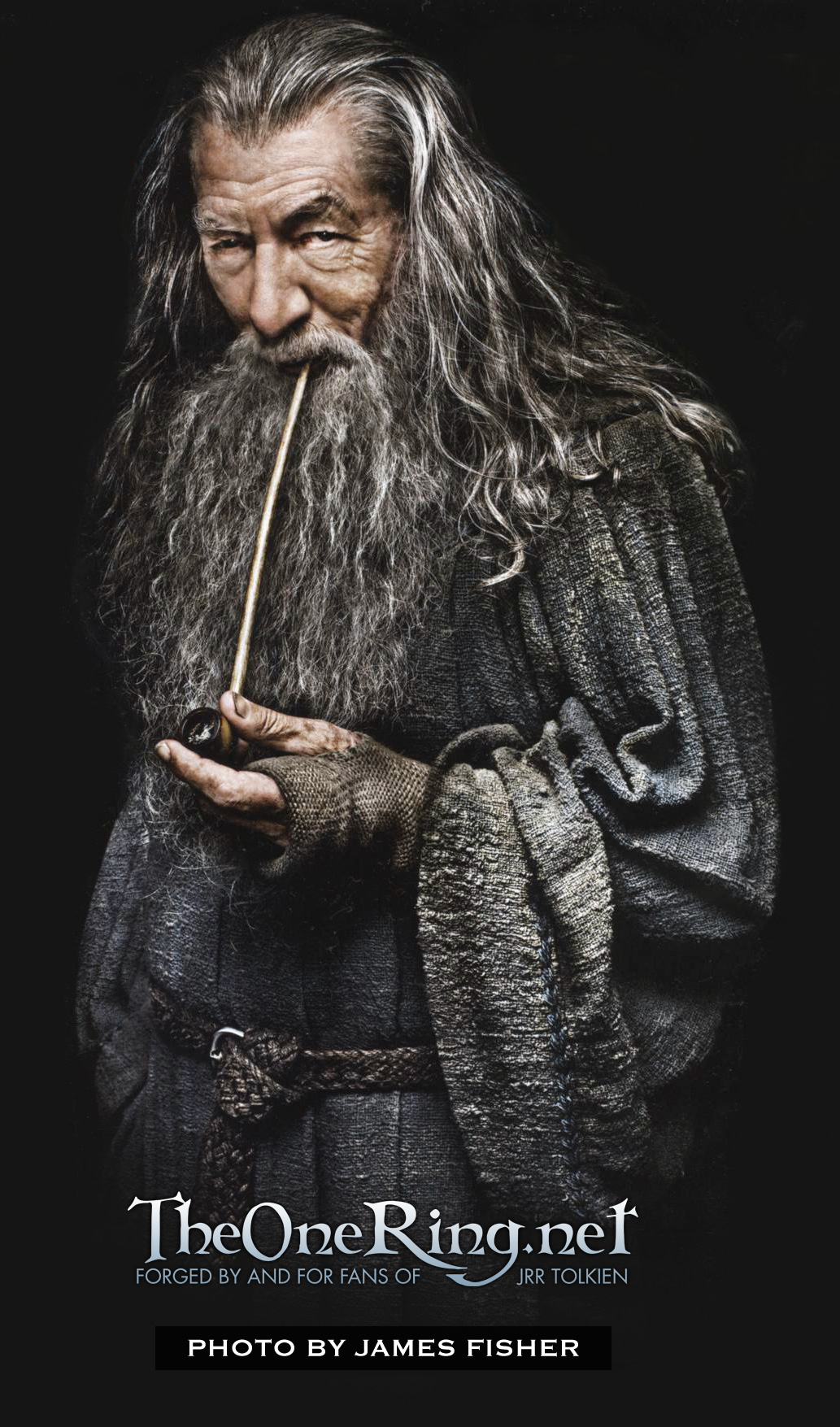
Image from theonering.net
Fantasy has long been a part of every society. For centuries, people across the world have told stories of wondrous events, larger than life people, gods, heroes, and villains. Those with the imagination to dream filled their family and friends' hearts and minds with tales of the Sun Gods or the Goddess of War, of malevolent beings that rotted the crops, and even the grim apparition of Death given human form. There are many reasons that our ancestors created stories from nothingness: fear of the unknown, confusion at a tragedy, a desire to understand the mysteries of a vast, unknowable world. “...there was a time when all literature was fantasy. How could it be otherwise, when a bad corn crop or a sudden epidemic among the new lambs could only have been caused by the anger of some god, or the spiteful sorcery of the people in the next village, eight miles over the hill, who were all demons, as everyone knew?” (Beagle). At what point did the telling of fantastic stories change from a response to fear, and become a way to improve lives? What are the characteristics of fantasy as a genre, and why is it important to our society and our children?

With such matters of fear and terror propelling invention forward, it comes as no surprise that fantasy was rooted into our collective minds, from the dawn of time. From stories told with crude language around a fire, to the latest best-selling door-stop of a novel from Brandon Sanderson (Mistborn, The Way of Kings) or Pat Rothfuss (The Kingkiller Chronicles), fantasy has become a major genre in its own right, and continues to grow.

How did the genre of fantasy come about? This is an interesting question, and one not easily answered. Through the ages, men and women have written works that touch on fantasy, or even embrace it fully, but simply happen to have been published before the term “fantasy” was coined. Writers such as the Greek poet Homer scratched out masterpieces of mythology that dealt heavily in other-worldly or divine matters, with strange creatures, and powerful men who defied gods. William Shakespeare wrote of witches and satyrs, ghosts and demons. Edgar Allen Poe penned dark works of the supernatural, filled with horror and the unknown. Hundreds of others dove head first into the stranger side of fiction, building their craft over decades, and across audiences.

Eventually fantasy began to take form, separating itself from its origins to become its own genre. There are many characteristics that define fantasy, nearly as many as there are books in the genre. However, fantasy is usually set in a defined world, written with the intent of being fictitious. Primarily seen as a form of entertainment, fantasy can include wizards, sorceresses, rangers, dragons, elves, and dwarves, like The Lord of the Rings by JRR Tolkien. However, many successful fantasy novels include none of the above, such as the masterful The Wheel of Time by Robert Jordan, whose work consists entirely of human characters battling twisted creatures and evil men. W.H. Auden's essay on The Lord of the Rings states, “Many quest tales are set in a dreamland, that is to say, in no definite place or time. This has the advantage of allowing the use of all the wealth of dream imagery, monsters, magical transformations and translations, which are absent from our waking life” (Zimbardo and Isaacs). From this we see that fantasy cannot be defined by conventional means, having the whole canvas of the human mind to paint upon.

Modern fantasy has been described as “escapist literature”, and with good reason. While quality fantasy does incorporate elements and ideals from our world, its primary goal is to take the reader away, filling their head with the fantastic, whether the end goal be a sense of wonder, spine-crawling fear, unease in a lonely bedroom at night, triumph of the human spirit, love for mankind, or any of the myriad emotions such books can draw from the hearts of its readers.

At some point in its long, ambiguous history, someone had to introduce the world to what could be called the very first official fantasy novel. Widely considered by many people to be the grandfather of modern fantasy, that person was JRR Tolkien. Born in 1892, John Ronald Reuel Tolkien was an enthusiastic student of linguistics, and also a professor at the University of Oxford (Doughan). A contemporary of C.S. Lewis (The Chronicles of Narnia), and George McDonald (The Princess and the Goblin), Tolkien was already surrounded by the burgeoning field of fantasy before it was called such. One day while grading papers, he wrote a simple but fateful sentence, his reason or inspiration for doing so a mystery: “In a hole in the ground, there lived a hobbit.” Years later, The Lord of the Rings was born, and over the decades, its popularity swelled without the media hype we have come to expect today, gathering speed by word of mouth and rolling into the juggernaut of literature that it is now (Zimbardo and Isaacs).

The Lord of the Rings proved to be a cultural revolution, proving once and for all, that fantasy had the guts to stand up to its larger, beefier literary opponents. The tale of an unlikely hero, a humble hobbit, rising to do great good, impeded by foul creatures and treacherous men, but most importantly, battling valiantly against his own heart's selfish desires spoke to its readers. “The game of The Lord of the Rings is miraculously designed to be played and won by anyone who takes part, but the reader who doesn't see the significance of its urgent bearing on humanity will always be a loser” (Zimbardo and Isaacs). The story of Frodo Baggins, Gandalf the Grey, Samwise Gamgee, and the evil lord Sauron brought a definitive flavor to the new genre, setting the stage for many works to come.

As the years went on, new contenders waded into the field of fantasy. Authors such as Terry Brooks with his Sword of Shannara series continued where Tolkien left off, furthering the cause of fantasy. Books began to grow off the shelves, each work employing a working formula that has proven able to stand the test of time. Fantasy began to develop sub-genres as more and more writers explored all the recesses of its possibilities.

Robert Jordan helped perfect the Epic Fantasy, working off of Tolkien's travel-log style questing, translating age-old themes into modern day words. With his incredible talent for bringing characters and conflict to life, he created a world many a reader has lost themselves within. The New York Times, speaking of Robert Jordan's The Wheel of Time, states that he has “...come to dominate the world that Tolkien began to reveal.” Terry Goodkind and George R. R. Martin took fantasy to its dark side, with gritty pages filled with violence and tragedy. Young Adult fantasy such as The Prydain Chronicles by Lloyd Alexander emerged, followed later by the likes of Harry Potter by J.K. Rowling, and Fablehaven, written by Brandon Mull, catering to a growing fan base of young readers, eager to devour anything to take their minds off the drudgery of school and social awkwardness, while at the same time growing their love for the written word. Urban Fantasy invaded our world with stories of magic breaking through into our streets, entangling young boys and girls in problems beyond their depth. In a recent post on Tor Fiction's website, Emily Asher-Perrin relates a bit of what made Harry Potter (a young-adult Urban Fantasy series) so special to her:

“While J.K. Rowling’s seven book saga was created for all generations to enjoy, there was something about growing up with the series that will forever define my generation. We are a group of people who believe in the impossible, in the power of love’s ability to protect and create, in silly things like jelly beans that taste like dirt and earwax, in bravery wrought through friendship and the need for a few basic spells to ease our way through daily life. (What? Chocolate and tea are homemade spells of a sort.) I can’t say whether Harry gave this to us, but I know that he was a part of it all, a uniting factor that allowed children and teens all over the world to lock eyes, smile and know that we weren’t so different after all”.

The genre has grown immensely, adding to itself, encapsulating mystery, thriller, horror, romance, suspense, and many other genres. No longer is fantasy relegated to a small, shadowy shelf set in the back of the local Barnes and Noble.

“It should come as no surprise then, that heroic fantasy fiction has had a slow, inexorable rise in both popularity and critical recognition. For several years, best selling lists have been dominated by epic fantasies by writers such as Tad Williams and Katharine Kerr. The US Realms of Fantasy magazine has claimed that 'fantasy outsells SF [science fiction] by a factor of three to one' while Tolkien's epic heroic fantasy The Lord of the Rings was recently chosen as the most popular and influential book ever published, by readers in three separate continents” (Forsyth).

Now, miles down the road from its humble origins, fantasy can have many qualities and components. There will always be the common tropes and clichés: the farm boy destined for something greater, the venerable wizard, a brilliant young girl, the evil overlord bent on destruction and chaos. Not always are things so cut and dried however. Dark plots, antiheroes, and morally gray protagonists color fantasy, giving it depth and texture. Universal themes run deeply in fantasy, pumped into the pages from the author's own heart, telling tales of the small conquering the mighty, courage and faith winning the day, sweat, blood, and tears barely justifying the victory. While the characters and settings may change, the fundamental purpose of fantasy stays the same: stories about humanity, and all that entails.

In her essay, Fantasy: why is the genre so popular?, Rowena Daniells quotes Kate Forsyth (The Chain of Charm), who states:

“Fantasy fiction does not deny or diminish the existence of sorrow and pain, as so many people seem to think. The possibility of failure is absolutely necessary for the “piercing sense of joy” one feels when victory is finally and with difficulty won. Like a candle-flame, fantasy casts a shadow at the same time that it illuminates. Yet it is the illumination that is important. Fairy-tales all offer the hope that a happy ending is possible and we need to believe this. Fantasy denies ultimate despair. It holds out the hope for a better world, and signposts the way”.

What can the average reader gain from reading fantasy, and more importantly, what can young minds benefit from this? She continues:

“For the very best fantasy enlightens as well as beguiles, passing on the accumulated wisdom of our ancestors, mapping the boundaries of behaviour, and challenging our preconceptions of what is right and true”.

These qualities can have a profoundly positive affect on a person's mind, imprinting young and old readers alike with a sense of wonder and desire to not only see good done, but to be the ones who do it.

Fantasy has grown as a genre, filling bookshelves, filling minds, and expanding imaginations. Fantasy books have spawned numerous movies, guide books, television shows, trading card games, video games, and much more. Much of today's popular media is brought about by the intrepid few who dared the critic's ire and wrote The Lord of the Ringsand The Chronicles of Narnia.

It hasn't always been a smooth road. Fantasy as a whole has come under attack from many sources, and for many reasons. Religious fanatics condemning magic as unholy, professors and educators calling it down as worthless, and men and women who simply cannot suspend their sense of disbelief calling it childish have sought to belittle its authors and readership. Even some fans of fantasy themselves rail against the beast it has become, calling newly released books by the derogatory term, “extruded fantasy product”, believing the archetypal stories to be squeezed-out drivel. Such criticisms can be the most hurtful, for they misunderstand the whole reason for fantasy's existence, to the accuser's loss. Fantasy is not intended to push the envelope, or walk the edge of what is socially acceptable, but to reinforce stories of goodness, and encourage imitation of such in real life. Once again, Kate Forsyth has a solid point, in fantasy's favor: “When it was published, one critic dismissed Tolkien's mammoth and scholarly work as a 'don's whimsy'. Yet is has never been out of print, has spawned countless imitations, and is now an industry in itself, ranging from scholarly critical appraisals to pictorial guides to the habits of hobbits. There is graffiti in university toilets that reads 'Frodo lives'; and you can buy car-stickers that say: 'Tolkien Is Hobbit-Forming'. Very few people have ever read James Joyce; most have read Tolkien.”

So why would anyone read about elves and dwarves, magic and dragons? Each fan might have a different answer, each passionate and thoughtful. For some it might be the magic, a wondrous and ethereal power that can do amazing things, or a dreaded black hole of fear and control, depending on its use. For others it may be the long standing theme of good versus evil, where anyone, no matter how insignificant or poor, may stand up to evil and all its powers, if only given the chance. Kate Forsyth quotes Stephen Donaldson on the subject of why fantasy is relevant in today's world:

"One of the oldest and most enduring forms of literature in all languages is fantasy. We need metaphors of magic and monsters to understand the human condition. It's only in modern times that we have suddenly decided this narrative language isn't serious, that it's for children; grown-ups don't believe these things... We've reached the point in our sophistication of our self-perceptions when it no longer seems possible to make epic statements about the meaning of life. You get laughed at for doing it, and epics ceased to be written. But in order for us to have this type of heroism, beauty, glory, magic and power we have to get away from real life” (Forsyth).

Peter Orullian, author of the newly released epic fantasy novel from Tor Fiction The Unremembered adds this, “There are many reasons I love to both read and write fantasy fiction. But high among them is the opportunity to treat Joseph Campbell’s hero’s journey. Few fiction genres can do it so well”. The hero's journey is the quintessential story of the departure, initiation, and return of a hero, usually following the path of personal growth and development of character (Bronzite). Such stories empower us as human beings, bolstering our hearts and minds to reach for the unattainable. It may simply be a book clutched in the hands of a fourteen year-old girl or boy, but one day, that young person will wake up to find themselves a grown adult, ready to face the challenging world, armed with the heartfelt truths and goodness of the stories from their youth.

It is clear that fantasy is here to stay. Going forward, readers will continue to discover not only strange new worlds inhabited by fantastic beings and creatures, but also discover a bit of themselves within every book they read. After all, fiction and non-fiction alike have had one purpose from the beginning of time: to explore ourselves.


Works Cited


Asher-Perrin, Emily. Growing Up Potter, Wednesday, June 15, 2011

Beagle, Peter S. The Secret History of Fantasy, 2010

Bronzite, Dan. The Hero's Journey - Mythic Structure of Joseph Campbell's Monomyth

Daniells, Rowena Corey. Fantasy: Why Is the Genre So Popular?

Doughan, David. J. R. R. Tolkien: A Biographical Sketch, 2002

Forsyth, Kate. Altair Magazine, Issue 2, 1998

Orullian, Peter. Personal Interview, June 19, 2011

Sanderson, Brandon. Goodbye Mr. Jordan, September 19, 2007

Zimbardo, Rose A. and Neil Isaacs. Understanding The Lord of the Rings, 2004


Works Consulted


Schwartz, Evan I. Finding Oz: How L. Frank Baum Discovered the Great American Story,2009

Jordan, Robert and Theresa Patterson. The World of Robert Jordan's The Wheel of Time,1997

Jordan, Robert. The Eye of the World, 1990