First off, this post is a little disjointed, and I can't be held responsible for bad grammar and spelling. (I wrote it over the course of three days, shoved in between studying.)
Long before I ever thought of being a writer, I was an artist. Before I read books for pleasure I was teaching myself to draw and fumbling around with techniques (with horrible results). I eventually began to develop some skill to go with my talent, and over the years, I produced some pretty good stuff (in my humble opinion). For a very long time I thought visual art would be my calling. Once I got my first computer and copy of Photoshop, I began to teach myself computer animation and graphic design. Later, while performing vocals in my deathcore band, I taught myself to make t-shirt and other merch designs, including two CD covers.
All seemed to point to a computer graphics/animation career, and I hoped to go to college for a degree in it some day. After my band... well, disbanded, I fell out of practice, as show posters and merch designs had been my main source of work. Somewhere along the way in the ensuing years, I also fell out of love with it. This crazy idea of writing a story pushed it from its place at the adult's table then kicked it in the kidneys.
And I'm glad it did.
Right now I'm in college, working on my generals. One of my current classes is Art History 2720, and I hate it. I can't remember an exam I have feared so much as the one I just took. I'm no slob when it comes to retaining information and so on, but the amount of specific detail the professor demanded within an hour class is, quite frankly, insane. All I want to do is write, and anything that takes me away from that is a waste of time (or so I feel). Math I can handle (shockingly enough), as it only requires practice and knowledge of formulas and methods (you can't mess that up). Art History and my (shudder) Philosophy class require a different kind of brain power. And it's not just the frustration of connecting ideas and concepts, or simply memorizing dates, it's doing things the instructor's way, or the highway. It's all about their interpretation, even when it's blatantly wrong or out of context (looking at you Philosophy Professor).
I suppose it's mostly a matter of what I'm willing to place importance in, and while I know deep down that college is important, it just feels like a waste of time. Not just a waste; it is actively taking away from my ability to work on the dream of being a writer. I have no time to practice, no time to edit, and certainly no time to actually write the fiction. The only reason I continue with college is the fact that I can't simply rely on writing to support me. I'm not so egotistical as to imagine that I can "make it" or get published. It's only a dream so far, and dreams don't put food in your mouth. But if I use college as my back up plan, is it really worth it if it wholly prevents me from pursuing my dream?
Why can't I dream of being a doctor?

Showing posts with label reasons. Show all posts
Showing posts with label reasons. Show all posts
Difficulty writing, and what I need to do about it. (Suggestions are welcome.)
Lately I've been having a hard time sitting down to write. I've written about this before, I know, but it has since become worse, to the point of complete stagnation in my writing. As some of you know, I recently decided to shelve The Sometimes Sword, of which I was on the third draft. You can read about it here. I have started work on a new book, but I find myself wondering sometimes if I'm really cut out for this. I have always heard (and I have said myself) that a writer has to slog forward, and just do it. It's good advice for sure, logical and all that. But it misses an important point. What if you can't slog forward, because you can't seem to put your fingers on the keyboard? What if every time you sit down you feel sick, and ashamed? What if so many doubts clog your brain that you can't seem to recall any words other than self-recriminations?
Can I really call myself a writer when I let two, three months go by without actually, you know, writing? Thankfully as of today I started once more on writing the actual words of my new first draft, but how long will that last? How long until I look at what I've done and start hating it?
My goal right now, and it feels so inadequate, is to write at least once a week. This is a far cry from 5 pages a day like my last book. But with school and work I'm mentally exhausted every night. (I hate you Philosophy 1200.) It feels like writing would be a bad idea most of the time. I rationalize that the stress isn't worth it, that I as an adult can choose to do what seems to be the easiest thing in the evenings, and if that's not writing, then so be it.
Somehow, I know that's all wrong. I know it is. But it persists. Does anyone have suggestions, or even similar thoughts? I want to hear about them, and maybe what you are doing to overcome them.
I can't believe I'm doing this....
I have come to the incredibly painful conclusion that it is time for "The Sometimes Sword" and I to part ways. It has been an amazing several months, and I have pinned a lot of hopes and countless hours on this book. However, I have come to the realization that despite my best efforts, "The Sometimes Sword" is at best a step on my journey, and nothing more.
I will continue to write, and as I type this, I am concocting the beginnings of another book, one that will hopefully incorporate all that was good in "The Sometimes Sword", and none of the bad. To be honest, I'm feeling pretty emotional about it, and saying goodbye to these characters will be incredibly difficult to say the least. But, I have to be realistic, and if I ever want to be read by real audiences, I can't cling to something that is fundamentally flawed.
And so I say goodbye to you, Sometimes Sword, you will always remain with me, my first book, my first success, and hopefully not the last. Thank you for teaching me how to be a better writer.
Chale and Astrid, thank you for being my friends.
I will continue to write, and as I type this, I am concocting the beginnings of another book, one that will hopefully incorporate all that was good in "The Sometimes Sword", and none of the bad. To be honest, I'm feeling pretty emotional about it, and saying goodbye to these characters will be incredibly difficult to say the least. But, I have to be realistic, and if I ever want to be read by real audiences, I can't cling to something that is fundamentally flawed.
And so I say goodbye to you, Sometimes Sword, you will always remain with me, my first book, my first success, and hopefully not the last. Thank you for teaching me how to be a better writer.
Chale and Astrid, thank you for being my friends.
Getting back that writing "spark".
 Like I said in yesterday's post, I really need to get back to work on my book. I think I need to start another set of short term goals and perhaps a daily work requirement. It's been long enough that I'm a tad scared that I lost the spark (by "long" I mean it has been a month since college started, and my editing time has been severely limited).
True, there have been times when I have had... well, time, but something always holds me back. Part of it is Writer's Depression, but mostly I think I may be burned out on that particular story. I've tried to begin new books in the meantime, with little success. (One of them might still be written someday because of a pretty fun setting, but all I could think of while I wrote in it was The Sometimes Sword.) It's a dilemma, for sure.
I'm starting to think that I need to do what I had to do when writing the first draft: knuckle down and get over it. I can't afford to let writing become less a part of me. I need that spark back, and sometimes that takes work. Painful, painful work.
So tonight I begin again in earnest. My goal is a final draft ready for submission by the end of the year. I will make this happen, and I will not give up until I have at least fifty rejection letters. Less would be fine by me. So what if this is only my second real attempt at a book. No author's story is the same, and I plan to go all out!
What about you? What are your short-term writing goals?
Discovering Setting.

I'm unashamedly fond of the stereotypical fantasy setting: a pseudo middle-earth/medieval land ruled by kings and fought over by powerful magics. It just works for me. It's where I live inside my own head, and it's where I want my characters to live (I may be a bit guilty of reverse Mary-Sue-ism). A lot of people moan and complain about it, that it's overused, boring, or an unimaginative rip-off of Tolkien. Some of this may be true, but I would argue that there is also plenty of great fantasy out there that doesn't follow this formula. So much of it in fact, that I am surprised these complainers haven't tripped on it on their way to the forums (lame joke, I know). This is a problem to me: a bunch of loud-mouthed minority opinions that step on aspiring writer's dreams of writing the fiction they love.
Why should you ignore it? Because you are free to do as you wish, and there will always be enough readers to go around. But this isn't what I want to discuss. I want to explore the many options we have as writers in creating the world our characters live in. After all, you are the god of your story. Your word is law. Just make sure it's good stuff.
A lot of people start with setting, before anything else. And there's nothing wrong with that. Some major-hitting authors (I can't remember which at the moment, it might have been Orson Scott Card) have gone on record as saying they start with nothing but a map, then build everything else from there. There is no right or wrong (I personally start with a character first). Culture, politics, magic systems, and geography all have a part in Setting, so be thinking about all those things as you read on.
So you have this vague idea. Maybe its an image that struck you of a misty bridge built between clouds, or an Inn's warm kitchen set in a forest. Perhaps it's a smell that exists only in your head: the salty smell of a calm beach or the char-choked air of a burned-out city. The smallest things can spark a setting, you just have to build on that spark... or maybe a better analogy would be: fan that spark into roaring flames. Whatever.
It's sometimes difficult to explain the process of world building from a tiny idea, it happens extremely fast in my own head, and I'm sure most of you know what I mean. It's a process of exploring the surroundings of that calm beach from above, asking where it exists, why is it there. Are there people about? What do they do? The key is to ask questions of yourself. Then it's your job to make up the answers. To me, this process is incredibly enjoyable. It's pure make-believe and creation. Allow yourself to go wild, no holds barred. If you start out big and crazy, it's easy to reel yourself back in if need be, however, starting out too small and conservative can be troublesome. So explore those dusty corners of your brain, think back to when you were a kid and that one book about talking animals made you crazy (or whatever did the same for you). Why did it stick with you for so long? Use that feeling it gave you and run with it, making your own world in the process.
A word of caution that I had to learn the hard way: make sure everything makes sense. Your readers are willing to suspend their disbelief, but only so far. If you have floating pink mush balls for characters that live in someone's lower intestine, make sure every other detail fits with that. Don't break the illusion. It's hard to coordinate all the facts, so make a list, or write a small history book entry for your world. Use time lines or cork boards and note cards, whatever you are comfortable with. Don't be afraid to write pages of world-building.
On the other hand, don't. It works both ways. On my second book (after giving up the first one as a bad job) I went into it with the express intent to not do any world building. Any details were to come about in the actual pages. My goal was to put all my creative effort into the book itself, and not draw maps or make index entries for characters. And you know, it worked pretty well. I actually finished the first draft this time, in less than a month. This may not work for you, but don't be afraid to experiment.
In conclusion, there is no right or wrong way, just results. Find what works best for you, and do it. And have FUN.
What I'm currently working on (a continuation to the post about my beginnings).
Back in mid-April I was struggling with a 75k-word behemoth of a book that was only a third of the way through. I had been working in it for over a year, and knew I was floundering in a sea of details and plot points. I needed a change.
My beginning, and the book no one (besides Becky) will ever see.
There's a lot to write about, now that I've started to relate some of my experiences. Where to begin....
The way I started out writing was probably pretty common. Like many pale denizens of the MMORPG scene, I am an avid World of Warcraft fan (shhhh). I had played for maybe a year before thoughts of RP began entering my head (RP means "role playing"), just something to make the grind of leveling yet another character to max level less boring. All these ideas suddenly sprung into my head about my character: backstory, setting, internal conflicts, and so on. I began to write as feverishly as a five year-old girl colors a picture of a pony pink, typing away at my phone (yes, I did begin my first project on a touch screen cell phone) on lunch breaks. When I say feverishly, I mean feverishly.
The way I started out writing was probably pretty common. Like many pale denizens of the MMORPG scene, I am an avid World of Warcraft fan (shhhh). I had played for maybe a year before thoughts of RP began entering my head (RP means "role playing"), just something to make the grind of leveling yet another character to max level less boring. All these ideas suddenly sprung into my head about my character: backstory, setting, internal conflicts, and so on. I began to write as feverishly as a five year-old girl colors a picture of a pony pink, typing away at my phone (yes, I did begin my first project on a touch screen cell phone) on lunch breaks. When I say feverishly, I mean feverishly.
Why fantasy is important.
Fantasy:
More Than Wizards And Dragons
By Trevor Green
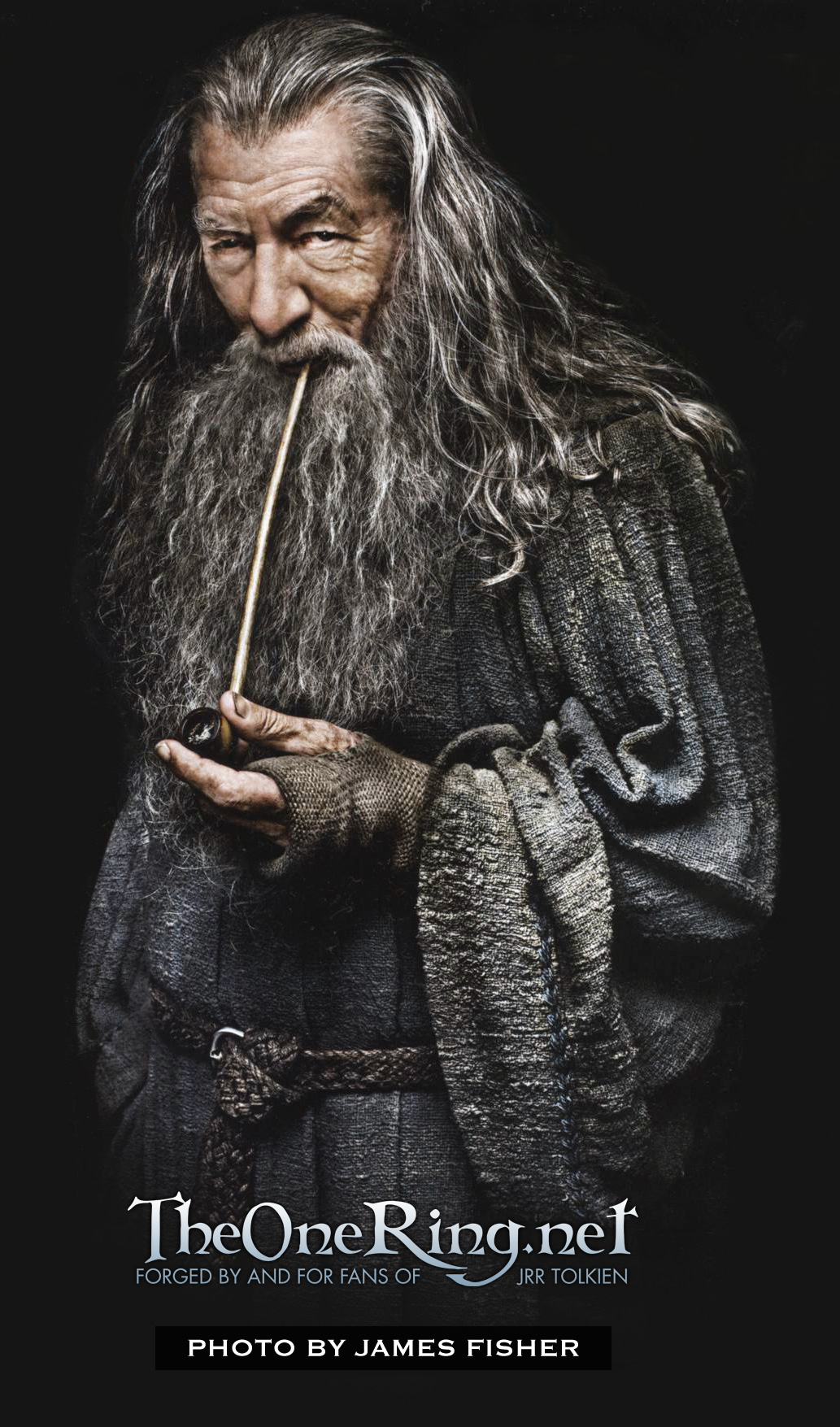 |
| Image from theonering.net |
With such matters of fear and terror propelling invention forward, it comes as no surprise that fantasy was rooted into our collective minds, from the dawn of time. From stories told with crude language around a fire, to the latest best-selling door-stop of a novel from Brandon Sanderson (Mistborn, The Way of Kings) or Pat Rothfuss (The Kingkiller Chronicles), fantasy has become a major genre in its own right, and continues to grow.
How did the genre of fantasy come about? This is an interesting question, and one not easily answered. Through the ages, men and women have written works that touch on fantasy, or even embrace it fully, but simply happen to have been published before the term “fantasy” was coined. Writers such as the Greek poet Homer scratched out masterpieces of mythology that dealt heavily in other-worldly or divine matters, with strange creatures, and powerful men who defied gods. William Shakespeare wrote of witches and satyrs, ghosts and demons. Edgar Allen Poe penned dark works of the supernatural, filled with horror and the unknown. Hundreds of others dove head first into the stranger side of fiction, building their craft over decades, and across audiences.
Eventually fantasy began to take form, separating itself from its origins to become its own genre. There are many characteristics that define fantasy, nearly as many as there are books in the genre. However, fantasy is usually set in a defined world, written with the intent of being fictitious. Primarily seen as a form of entertainment, fantasy can include wizards, sorceresses, rangers, dragons, elves, and dwarves, like The Lord of the Rings by JRR Tolkien. However, many successful fantasy novels include none of the above, such as the masterful The Wheel of Time by Robert Jordan, whose work consists entirely of human characters battling twisted creatures and evil men. W.H. Auden's essay on The Lord of the Rings states, “Many quest tales are set in a dreamland, that is to say, in no definite place or time. This has the advantage of allowing the use of all the wealth of dream imagery, monsters, magical transformations and translations, which are absent from our waking life” (Zimbardo and Isaacs). From this we see that fantasy cannot be defined by conventional means, having the whole canvas of the human mind to paint upon.
Modern fantasy has been described as “escapist literature”, and with good reason. While quality fantasy does incorporate elements and ideals from our world, its primary goal is to take the reader away, filling their head with the fantastic, whether the end goal be a sense of wonder, spine-crawling fear, unease in a lonely bedroom at night, triumph of the human spirit, love for mankind, or any of the myriad emotions such books can draw from the hearts of its readers.
At some point in its long, ambiguous history, someone had to introduce the world to what could be called the very first official fantasy novel. Widely considered by many people to be the grandfather of modern fantasy, that person was JRR Tolkien. Born in 1892, John Ronald Reuel Tolkien was an enthusiastic student of linguistics, and also a professor at the University of Oxford (Doughan). A contemporary of C.S. Lewis (The Chronicles of Narnia), and George McDonald (The Princess and the Goblin), Tolkien was already surrounded by the burgeoning field of fantasy before it was called such. One day while grading papers, he wrote a simple but fateful sentence, his reason or inspiration for doing so a mystery: “In a hole in the ground, there lived a hobbit.” Years later, The Lord of the Rings was born, and over the decades, its popularity swelled without the media hype we have come to expect today, gathering speed by word of mouth and rolling into the juggernaut of literature that it is now (Zimbardo and Isaacs).
The Lord of the Rings proved to be a cultural revolution, proving once and for all, that fantasy had the guts to stand up to its larger, beefier literary opponents. The tale of an unlikely hero, a humble hobbit, rising to do great good, impeded by foul creatures and treacherous men, but most importantly, battling valiantly against his own heart's selfish desires spoke to its readers. “The game of The Lord of the Rings is miraculously designed to be played and won by anyone who takes part, but the reader who doesn't see the significance of its urgent bearing on humanity will always be a loser” (Zimbardo and Isaacs). The story of Frodo Baggins, Gandalf the Grey, Samwise Gamgee, and the evil lord Sauron brought a definitive flavor to the new genre, setting the stage for many works to come.
As the years went on, new contenders waded into the field of fantasy. Authors such as Terry Brooks with his Sword of Shannara series continued where Tolkien left off, furthering the cause of fantasy. Books began to grow off the shelves, each work employing a working formula that has proven able to stand the test of time. Fantasy began to develop sub-genres as more and more writers explored all the recesses of its possibilities.
Robert Jordan helped perfect the Epic Fantasy, working off of Tolkien's travel-log style questing, translating age-old themes into modern day words. With his incredible talent for bringing characters and conflict to life, he created a world many a reader has lost themselves within. The New York Times, speaking of Robert Jordan's The Wheel of Time, states that he has “...come to dominate the world that Tolkien began to reveal.” Terry Goodkind and George R. R. Martin took fantasy to its dark side, with gritty pages filled with violence and tragedy. Young Adult fantasy such as The Prydain Chronicles by Lloyd Alexander emerged, followed later by the likes of Harry Potter by J.K. Rowling, and Fablehaven, written by Brandon Mull, catering to a growing fan base of young readers, eager to devour anything to take their minds off the drudgery of school and social awkwardness, while at the same time growing their love for the written word. Urban Fantasy invaded our world with stories of magic breaking through into our streets, entangling young boys and girls in problems beyond their depth. In a recent post on Tor Fiction's website, Emily Asher-Perrin relates a bit of what made Harry Potter (a young-adult Urban Fantasy series) so special to her:
“While J.K. Rowling’s seven book saga was created for all generations to enjoy, there was something about growing up with the series that will forever define my generation. We are a group of people who believe in the impossible, in the power of love’s ability to protect and create, in silly things like jelly beans that taste like dirt and earwax, in bravery wrought through friendship and the need for a few basic spells to ease our way through daily life. (What? Chocolate and tea are homemade spells of a sort.) I can’t say whether Harry gave this to us, but I know that he was a part of it all, a uniting factor that allowed children and teens all over the world to lock eyes, smile and know that we weren’t so different after all”.
The genre has grown immensely, adding to itself, encapsulating mystery, thriller, horror, romance, suspense, and many other genres. No longer is fantasy relegated to a small, shadowy shelf set in the back of the local Barnes and Noble.
“It should come as no surprise then, that heroic fantasy fiction has had a slow, inexorable rise in both popularity and critical recognition. For several years, best selling lists have been dominated by epic fantasies by writers such as Tad Williams and Katharine Kerr. The US Realms of Fantasy magazine has claimed that 'fantasy outsells SF [science fiction] by a factor of three to one' while Tolkien's epic heroic fantasy The Lord of the Rings was recently chosen as the most popular and influential book ever published, by readers in three separate continents” (Forsyth).
Now, miles down the road from its humble origins, fantasy can have many qualities and components. There will always be the common tropes and clichés: the farm boy destined for something greater, the venerable wizard, a brilliant young girl, the evil overlord bent on destruction and chaos. Not always are things so cut and dried however. Dark plots, antiheroes, and morally gray protagonists color fantasy, giving it depth and texture. Universal themes run deeply in fantasy, pumped into the pages from the author's own heart, telling tales of the small conquering the mighty, courage and faith winning the day, sweat, blood, and tears barely justifying the victory. While the characters and settings may change, the fundamental purpose of fantasy stays the same: stories about humanity, and all that entails.
In her essay, Fantasy: why is the genre so popular?, Rowena Daniells quotes Kate Forsyth (The Chain of Charm), who states:
“Fantasy fiction does not deny or diminish the existence of sorrow and pain, as so many people seem to think. The possibility of failure is absolutely necessary for the “piercing sense of joy” one feels when victory is finally and with difficulty won. Like a candle-flame, fantasy casts a shadow at the same time that it illuminates. Yet it is the illumination that is important. Fairy-tales all offer the hope that a happy ending is possible and we need to believe this. Fantasy denies ultimate despair. It holds out the hope for a better world, and signposts the way”.
What can the average reader gain from reading fantasy, and more importantly, what can young minds benefit from this? She continues:
“For the very best fantasy enlightens as well as beguiles, passing on the accumulated wisdom of our ancestors, mapping the boundaries of behaviour, and challenging our preconceptions of what is right and true”.
These qualities can have a profoundly positive affect on a person's mind, imprinting young and old readers alike with a sense of wonder and desire to not only see good done, but to be the ones who do it.
Fantasy has grown as a genre, filling bookshelves, filling minds, and expanding imaginations. Fantasy books have spawned numerous movies, guide books, television shows, trading card games, video games, and much more. Much of today's popular media is brought about by the intrepid few who dared the critic's ire and wrote The Lord of the Ringsand The Chronicles of Narnia.
It hasn't always been a smooth road. Fantasy as a whole has come under attack from many sources, and for many reasons. Religious fanatics condemning magic as unholy, professors and educators calling it down as worthless, and men and women who simply cannot suspend their sense of disbelief calling it childish have sought to belittle its authors and readership. Even some fans of fantasy themselves rail against the beast it has become, calling newly released books by the derogatory term, “extruded fantasy product”, believing the archetypal stories to be squeezed-out drivel. Such criticisms can be the most hurtful, for they misunderstand the whole reason for fantasy's existence, to the accuser's loss. Fantasy is not intended to push the envelope, or walk the edge of what is socially acceptable, but to reinforce stories of goodness, and encourage imitation of such in real life. Once again, Kate Forsyth has a solid point, in fantasy's favor: “When it was published, one critic dismissed Tolkien's mammoth and scholarly work as a 'don's whimsy'. Yet is has never been out of print, has spawned countless imitations, and is now an industry in itself, ranging from scholarly critical appraisals to pictorial guides to the habits of hobbits. There is graffiti in university toilets that reads 'Frodo lives'; and you can buy car-stickers that say: 'Tolkien Is Hobbit-Forming'. Very few people have ever read James Joyce; most have read Tolkien.”
So why would anyone read about elves and dwarves, magic and dragons? Each fan might have a different answer, each passionate and thoughtful. For some it might be the magic, a wondrous and ethereal power that can do amazing things, or a dreaded black hole of fear and control, depending on its use. For others it may be the long standing theme of good versus evil, where anyone, no matter how insignificant or poor, may stand up to evil and all its powers, if only given the chance. Kate Forsyth quotes Stephen Donaldson on the subject of why fantasy is relevant in today's world:
"One of the oldest and most enduring forms of literature in all languages is fantasy. We need metaphors of magic and monsters to understand the human condition. It's only in modern times that we have suddenly decided this narrative language isn't serious, that it's for children; grown-ups don't believe these things... We've reached the point in our sophistication of our self-perceptions when it no longer seems possible to make epic statements about the meaning of life. You get laughed at for doing it, and epics ceased to be written. But in order for us to have this type of heroism, beauty, glory, magic and power we have to get away from real life” (Forsyth).
Peter Orullian, author of the newly released epic fantasy novel from Tor Fiction The Unremembered adds this, “There are many reasons I love to both read and write fantasy fiction. But high among them is the opportunity to treat Joseph Campbell’s hero’s journey. Few fiction genres can do it so well”. The hero's journey is the quintessential story of the departure, initiation, and return of a hero, usually following the path of personal growth and development of character (Bronzite). Such stories empower us as human beings, bolstering our hearts and minds to reach for the unattainable. It may simply be a book clutched in the hands of a fourteen year-old girl or boy, but one day, that young person will wake up to find themselves a grown adult, ready to face the challenging world, armed with the heartfelt truths and goodness of the stories from their youth.
It is clear that fantasy is here to stay. Going forward, readers will continue to discover not only strange new worlds inhabited by fantastic beings and creatures, but also discover a bit of themselves within every book they read. After all, fiction and non-fiction alike have had one purpose from the beginning of time: to explore ourselves.
Works Cited
Asher-Perrin, Emily. Growing Up Potter, Wednesday, June 15, 2011
Beagle, Peter S. The Secret History of Fantasy, 2010
Bronzite, Dan. The Hero's Journey - Mythic Structure of Joseph Campbell's Monomyth
Daniells, Rowena Corey. Fantasy: Why Is the Genre So Popular?
Doughan, David. J. R. R. Tolkien: A Biographical Sketch, 2002
Forsyth, Kate. Altair Magazine, Issue 2, 1998
Orullian, Peter. Personal Interview, June 19, 2011
Sanderson, Brandon. Goodbye Mr. Jordan, September 19, 2007
Zimbardo, Rose A. and Neil Isaacs. Understanding The Lord of the Rings, 2004
Works Consulted
Schwartz, Evan I. Finding Oz: How L. Frank Baum Discovered the Great American Story,2009
Jordan, Robert and Theresa Patterson. The World of Robert Jordan's The Wheel of Time,1997
Jordan, Robert. The Eye of the World, 1990
Subscribe to:
Posts (Atom)